
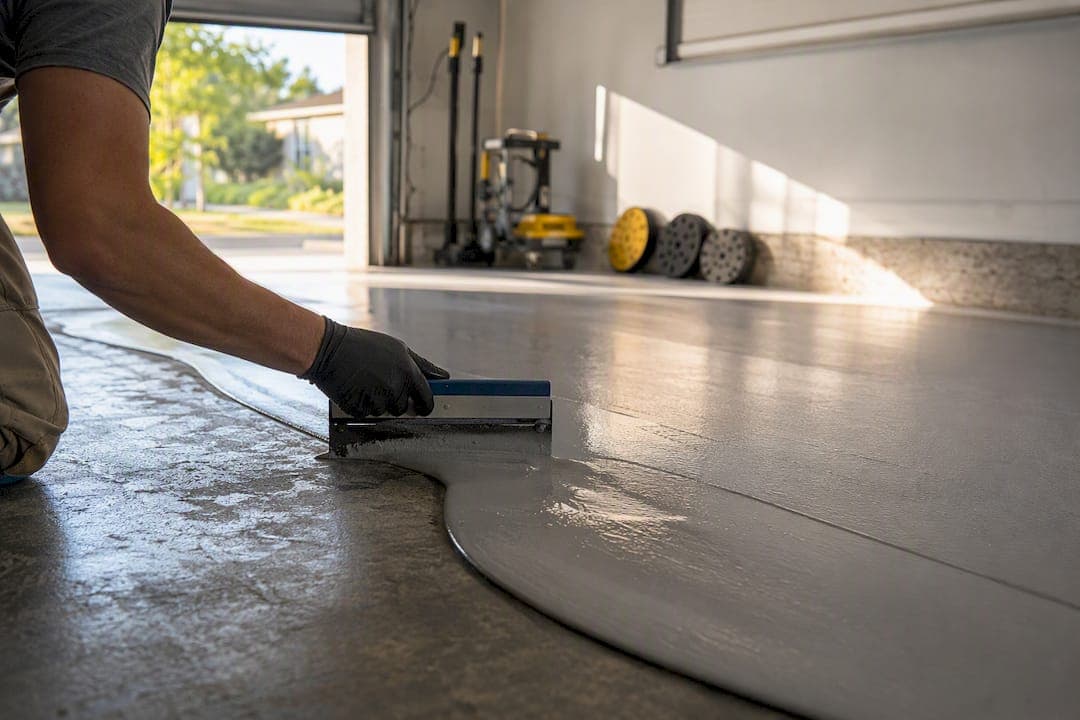
Antimicrobial epoxy flooring earns its premium in facilities with continuous moisture, food contact, or infection control requirements: hospitals, food processing plants, commercial kitchens, labs, and kennels. If your floor gets a daily washdown or answers to a health inspector, the additive pays for itself. If you're coating a warehouse or retail floor with normal foot traffic, standard 100% solids epoxy handles the job and antimicrobial technology adds cost without adding value.
One caveat before you sign anything: the additive suppresses microbial growth on the surface itself. It does not replace your cleaning protocols, and no sales rep should tell you otherwise.
Two things to do before you get a quote:
- Request the product data sheet and confirm EPA registration for the antimicrobial claim, not just the general epoxy product.
- Confirm the contractor is testing substrate moisture and planning proper prep, since a coating fails long before the additive ever matters if the concrete underneath isn't ready.
TL;DR:
- Antimicrobial epoxy flooring is most justified in environments with frequent washdowns, biological risks, or strict inspections, such as hospitals and food processing plants.
- Proper surface preparation with diamond grinding and thorough moisture testing are critical steps that determine the coating's longevity and effectiveness, regardless of antimicrobial claims.
- Mechanical durability, impact resistance, chemical resistance, slip safety, and UV stability must be specified and tested before considering antimicrobial features.
- The premium typically adds 15 to 30 percent to standard epoxy costs, and the benefits are justified only when operational risks warrant rigorous hygiene measures.
- Documentation including EPA registration, test data, and compliance certifications should be verified to ensure the antimicrobial system offers real value and durability.
Table of Contents
- What Antimicrobial Epoxy Flooring Actually Is
- Which Facilities Actually Justify the Antimicrobial Premium
- What to Require on Impact, Chemical, and Slip Specs
- How the Floor Gets Installed and What to Verify Beforehand
- Keeping the Antimicrobial Layer Working Year After Year
- What the Premium Actually Costs and When It Pays Off
- What Showmeepoxy Requires Before Any Antimicrobial Job
- Key Takeaways
- The Antimicrobial Add-On Isn't the Hard Part
- Get an Antimicrobial-Ready Floor Built on Proper Prep
- Sources
What Antimicrobial Epoxy Flooring Actually Is
Antimicrobial epoxy flooring is a resin system with metal-ion additives, usually silver, zinc, or copper, mixed into the coating to suppress bacterial and fungal growth on the surface. The mechanism is straightforward: metal ions disrupt microbial cell function on contact. E. coli and Staph](https://dgfloors.com/antimicrobial-epoxy-flooring/) within 24 hours, based on manufacturer test data.
Here's the distinction that trips up a lot of buyers: a surface sealer with antimicrobial properties is not the same thing as a fully integrated system. A sealer sits on top and wears off with traffic and floor scrubbing. An integrated system runs the additive through the primer, body coat, or both, so the protection doesn't disappear when the top layer scuffs.
When you're evaluating a proposal, look for:
- JIS Z 2801, the recognized international test standard for measuring antimicrobial activity on plastics and coated surfaces.
- EPA registration for the specific antimicrobial claim being made.
- HACCP certification if you're in food service, since Flowfresh's Polygiene-based systems are frequently specified for exactly this reason.
Which Facilities Actually Justify the Antimicrobial Premium
The decision usually comes down to how wet, how inspected, and how biologically risky your environment is.
- Food and beverage processing. Frequent washdowns, standing water, and USDA inspections make antimicrobial flooring close to standard practice. Resuflor 8746 is specifically positioned for USDA-inspected facilities because of its mold, fungus, and mildew resistance.
- Healthcare and pharmaceutical spaces. Operating rooms, sterile processing, and cleanrooms need seamless, non-porous floors that meet FDA, cGMP, and ISO cleanroom expectations, which pharmaceutical flooring guidance treats as baseline requirements, not upgrades.
- Labs and diagnostic facilities. Chemical spills combine with biological risk, so both chemical resistance and antimicrobial protection matter simultaneously.
- Commercial kennels and veterinary clinics. Constant moisture and animal waste create recurring biofilm problems that ordinary epoxy struggles to resist long term.
Where it's rarely worth the money: a typical dry warehouse, a retail floor, or a residential garage. Standard epoxy performs fine there, and the added cost buys you protection against a problem you don't have.
What to Require on Impact, Chemical, and Slip Specs
Before antimicrobial properties enter the conversation, the floor needs to survive the physical and chemical load of your facility. This is the mistake procurement teams make most often: they chase the additive and skip the mechanical spec sheet.
Ask suppliers for documented performance against:
- Impact resistance and abrasion resistance, typically referenced against ASTM standards for coating durability.
- Chemical resistance data covering the specific cleaners, acids, or solvents your facility actually uses, not a generic list.
- Thermal shock tolerance if the floor sees hot water washdowns or steam cleaning.
- Coefficient of friction (COF) testing for slip resistance, especially in wet processing areas; see this slip-resistant entrance surface installation guide for compliance details.
- UV stability, or lack of it. Standard epoxy yellows and chalks under sunlight, so any floor near windows or loading dock doors needs a UV-stable polyaspartic topcoat layered over the antimicrobial base.
Seamless coving at wall junctions and integrated drainage matter just as much as the coating chemistry, since a floor with gaps and seams gives bacteria somewhere to hide regardless of what additive you paid for. Some pharmaceutical and lab environments also spec ESD (static-dissipative) layers, which need to be confirmed separately since not every antimicrobial system supports it.
Pro Tip: Don't let a vendor lead the conversation with kill-rate percentages. Ask for the impact, chemical, and COF data first. A floor that fails mechanically in year two never gets the chance to prove its antimicrobial value.
How the Floor Gets Installed and What to Verify Beforehand
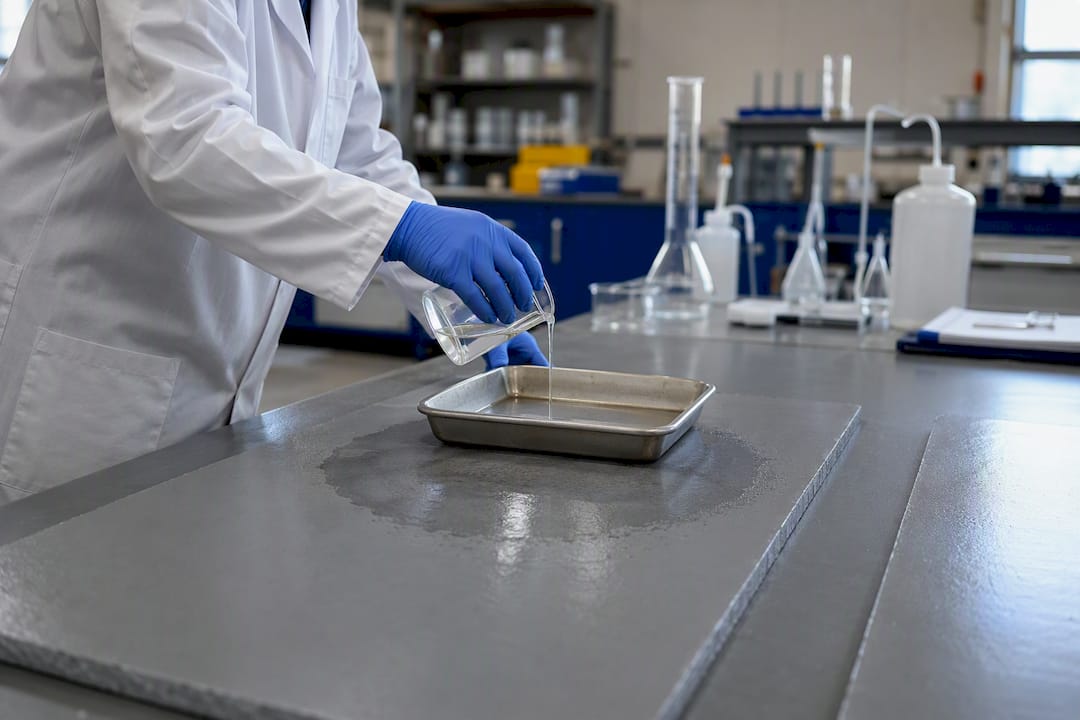
Surface prep decides whether any of this performs as advertised. Here's the sequence a competent installer should follow:
- Diamond grind the concrete to an appropriate CSP (Concrete Surface Profile) target, opening the pores so the coating actually bonds instead of sitting on top waiting to peel.
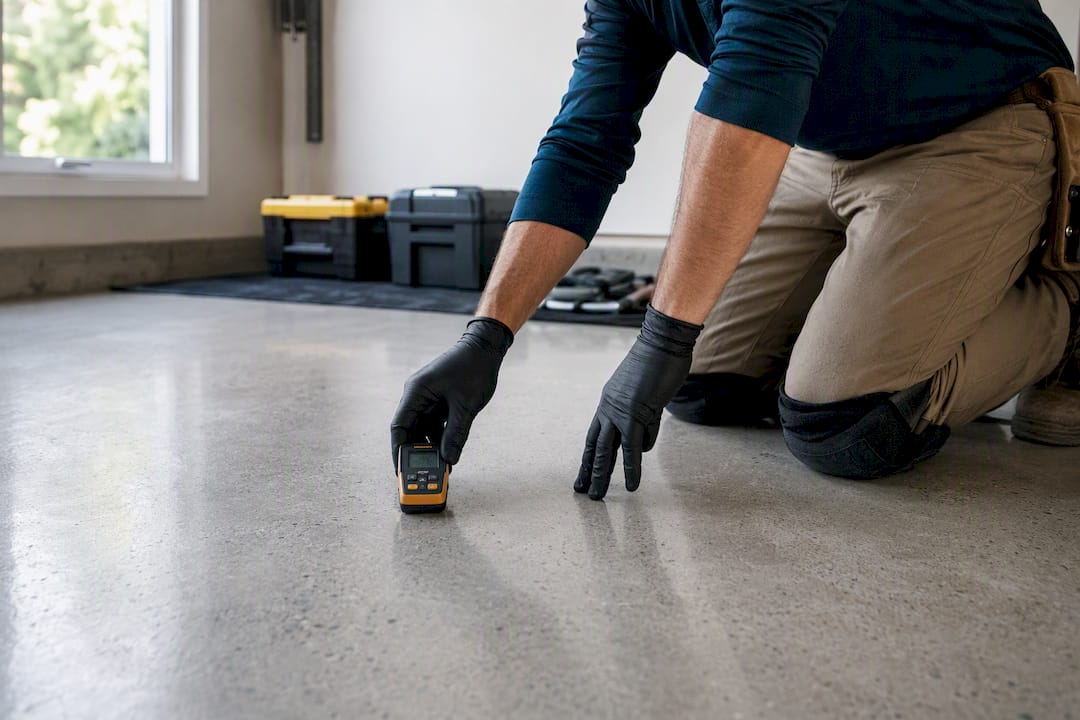
- Test moisture using calcium chloride testing or in-situ relative humidity probes. High moisture readings mean mitigation work before any coating goes down, since trapped moisture is a leading cause of coating failure and can even support mold growth beneath the surface.
- Build the system in layers: primer, then the antimicrobial body coat carrying the additive, then a UV-stable topcoat if the space gets sunlight. Cure windows vary by product but typically run 24 to 72 hours between coats.
Before signing a contract, request the product data sheet, the EPA registration number tied to the antimicrobial claim, any HACCP or FDA compliance documentation relevant to your industry, and photos of finished coving from a past job. Diamond grinding is the step most corner-cutting installers skip, and it's also the one that determines whether your floor lasts 10 years or fails in two.
Pro Tip: Ask to see the moisture test results in writing, not just verbal confirmation. A contractor who won't document this step is telling you something.
Keeping the Antimicrobial Layer Working Year After Year
Daily damp-mopping with an approved disinfectant and weekly auto-scrubbing keep bacterial load down and let the additive do its job rather than fight through accumulated grime. None of this replaces your cleaning schedule; the coating and the mop work together, not instead of each other.
Topcoats typically need refreshing every 7 to 10 years depending on traffic and chemical exposure. Watch for chalking, dulling, or visible wear patterns as your signal to resurface before the antimicrobial layer underneath gets compromised.
- Integrated systems keep working even as the surface wears, since the additive runs through the material itself.
- Surface-only treatments lose protection as soon as the top layer abrades, which happens faster than most facility managers expect in heavy wash-down zones.
That distinction is worth confirming in writing before you buy, because reduced biofilm and odor control depends on the additive still being present at the depth your traffic has worn down to.
What the Premium Actually Costs and When It Pays Off
Antimicrobial systems typically run 15 to 30% more than standard 100% solids epoxy. In practical terms, a 1,000 square foot installation with antimicrobial additives generally costs more than a standard system, by several thousand dollars.
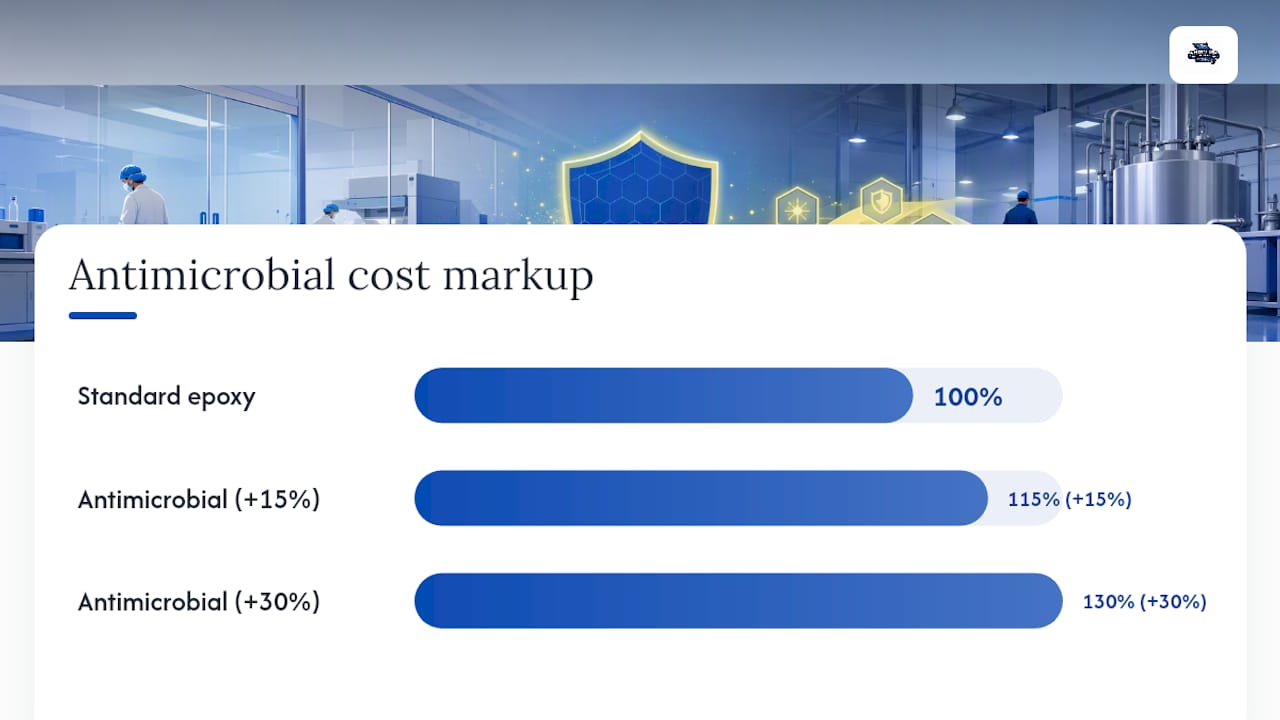
The premium pays off when it offsets a real cost elsewhere: reduced cleaning labor, fewer failed inspections, lower biofilm-related downtime, or avoided liability in a regulated facility. It rarely pays off on comfort or peace of mind alone.
Before you approve the budget, confirm:
- Your facility type appears on the list of environments where the premium historically pays for itself (food, healthcare, labs, wet processing).
- The contractor can document EPA registration and test data, not just marketing language.
- The mechanical and chemical specs are met first, since an antimicrobial floor that fails structurally saves you nothing.
What Showmeepoxy Requires Before Any Antimicrobial Job
Any installer proposing an antimicrobial system should be able to show you the same documentation Showmeepoxy requires internally before a commercial job starts: the product data sheet, EPA registration numbers tied to the specific claim, HACCP or inspection certificates where relevant, and close-up photos of coved edges and seams from completed work.
Diamond-grinding surface prep isn't optional for these builds. It's the single factor most likely to determine whether the coating bonds permanently or delaminates under wash-down pressure within a year or two. Showmeepoxy's own guidance on surface preparation and finish selection reflects the same standards you should hold any contractor to, antimicrobial or not.
A floor that looks finished but wasn't ground, tested for moisture, and coved properly at the walls isn't a hygienic floor. It's a liability wearing a clean topcoat.
When vetting a bid, ask directly:
- Can you see the EPA registration number, not just a marketing claim of "antimicrobial protection"?
- Will the contractor test moisture and document the readings?
- Do the coving photos from past jobs actually look seamless, or is there visible caulking covering gaps?
Key Takeaways
Antimicrobial epoxy flooring is justified when continuous moisture, food contact, or regulatory inspection make surface hygiene a measurable operational risk, not a preference.
| Point | Details |
|---|---|
| Match the use case | Reserve the antimicrobial premium for food processing, healthcare, labs, and wet-wash facilities, not standard warehouses. |
| Mechanical specs come first | Confirm impact, chemical, thermal, and slip resistance before evaluating antimicrobial claims. |
| Demand documentation | Require EPA registration, JIS Z 2801 test data, and HACCP certification where applicable, not just marketing language. |
| Substrate prep decides longevity | Diamond grinding and moisture testing determine whether the coating bonds permanently. |
| Budget realistically | Expect a 15 to 30% premium over standard epoxy. |
| Showmeepoxy sets the prep standard | Showmeepoxy requires diamond-grinding prep, documented moisture testing, and photo evidence of coving on every commercial job it bids. |
The Antimicrobial Add-On Isn't the Hard Part
Most of the advice circulating about antimicrobial flooring treats the additive as the headline decision. It isn't. The judgment call that actually determines whether a floor performs is mechanical: does the surface survive the impact, chemical, and thermal load of your facility for a decade? Get that wrong and the antimicrobial coating is irrelevant, because you'll be re-pouring before the additive ever gets tested by real conditions.
The conventional sales pitch inverts this. It leads with kill-rate percentages because they're persuasive and easy to print on a brochure. Facility managers who've been burned by a coating that peeled in 18 months know better: prep and mechanical spec come first, hygiene layer second.
What Showmeepoxy's own approach gets right is treating diamond grinding and moisture testing as non-negotiable steps, not upsells. That's the unglamorous work that actually protects your investment. If you're specifying antimicrobial epoxy for a genuinely demanding environment, insist on that sequence from any contractor, and be skeptical of anyone who wants to talk about silver-ion technology before they've talked about your concrete.
— Stephen
Get an Antimicrobial-Ready Floor Built on Proper Prep
If your facility needs a hygienic, durable floor that can actually handle wash-downs and inspections, Showmeepoxy builds that floor on diamond-ground concrete instead of a quick coat over unprepared slab, which is where most antimicrobial systems fail early.

Showmeepoxy installs industrial-grade epoxy and polyaspartic systems for commercial spaces across Mid-Missouri, with moisture testing, proper substrate prep, and UV-stable topcoats built into every commercial project, not sold as an add-on. If UV exposure is a factor in your space, the polyaspartic topcoat option solves the yellowing problem standard epoxy runs into over time. Get a straight answer on what your facility actually needs and a project timeline by requesting a free quote through Showmeepoxy, or run your own numbers first with the epoxy flooring cost calculator.
Sources
- Antimicrobial Epoxy Flooring: Pros, Cons, and Buying Guide - D and G Flooring
- Flowcrete Flowfresh Flooring | Antimicrobial Flowfresh Flooring
- Pharmaceutical and Healthcare Epoxy Flooring - HPSFloors