
Epoxy is the safer bet for most basements because it seals concrete against moisture and resists mold in a way carpet simply can't. Carpet earns its place only when the basement has a documented history of staying bone dry and comfort matters more than risk. Before buying either one, test the slab for moisture. That single step decides more than any product brochure will.
TL;DR:
- Proper moisture testing and slab preparation are critical to prevent epoxy failure, especially in basements with a water history.
- Epoxy is more suitable for wet or high-traffic areas, lasting over a decade when correctly installed, compared to shorter-lived carpet in damp environments.
- Carpet provides comfort and noise reduction in dry basements but increases mold and odor risks if padding absorbs moisture from leaks or humidity swings.
- Moisture-sensitive floors require a vapor barrier or raised subfloor system if moisture detection tests are borderline or inconclusive.
- Seasonal temperature and humidity fluctuations impact carpet more severely than epoxy, with moisture seeping into fibers and promoting mold growth over time.
Table of Contents
- Basement Epoxy vs Carpet: Why Epoxy Handles Moisture Better
- What Makes Carpet Appealing Despite the Risk
- Epoxy vs Carpet for Basements: A Side-by-Side Look
- Slab Prep and Moisture Testing Before You Buy Anything
- Cost, Lifespan, and What Triggers a Replacement
- Making Epoxy Feel Warmer and Softer
- Which Floor Fits Your Basement Scenario?
- How Basement Humidity and Temperature Swings Affect Each Floor
- Health Considerations: Mold, Allergens, and Off-Gassing
- Does Epoxy or Carpet Affect Basement Resale Value?
- The Show Me Epoxy Take on Basement Floors
- Get a Moisture Check and Quote for Your Basement Floor
- Sources
- FAQ
Basement Epoxy vs Carpet: Why Epoxy Handles Moisture Better
Epoxy chemically bonds to concrete and cures into a non-porous surface so water beads up and runs off instead of soaking in. That matters in a basement, where moisture wicks up through the slab from the soil below even when there's no visible leak. Moisture in basements is driven by soil contact and groundwater pressure, which is exactly why a sealed, non-absorbent surface has an advantage carpet can't match.
Done right, epoxy resists spills, chemicals, and abrasion well enough to handle a home gym's dropped weights or a workshop's grease and solvents. It also has real limits. Bare epoxy is a hard, cold surface underfoot, it can get slippery when wet unless an anti-slip additive is mixed in, and some formulations yellow under UV exposure over time. Cure temperature matters too. Most systems need the slab and ambient air within a specific range to set correctly.
Best uses: home gyms, workshops, laundry rooms, and multipurpose basements that see foot traffic, tools, or moisture year round.
- Non-porous surface sheds water instead of absorbing it
- Resists chemical spills, abrasion, and heavy foot traffic
- Requires correct cure temperature and proper additives for slip resistance
Pro Tip: Never let an installer skip the moisture test or the surface grinding. A gorgeous epoxy pour over a damp, unpropped slab will bubble or peel within a year, no matter how good the resin is.
What Makes Carpet Appealing Despite the Risk
Carpet wins on comfort in a way epoxy never will. It's warm underfoot, it deadens sound between floors, and it turns a concrete box into a room people actually want to sit in. Carpet's biggest strength is comfort and quiet, and its biggest weakness is moisture in any basement with even a minor damp history.
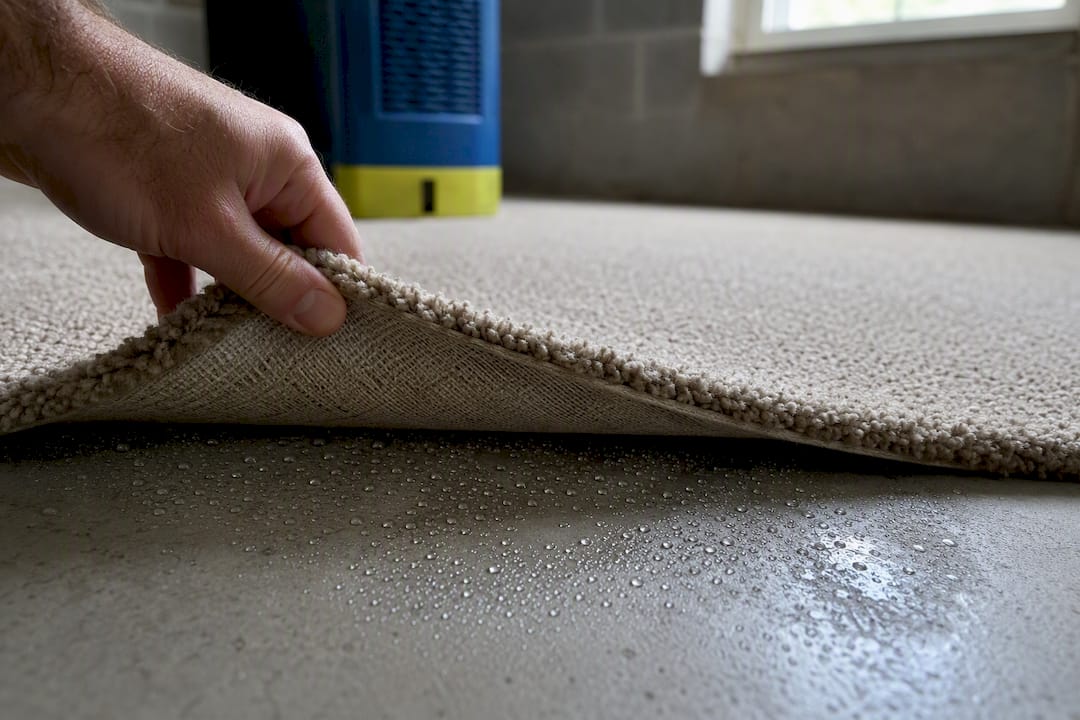
The problem is what's underneath the fibers. Padding acts like a sponge, and once it absorbs water from a small leak, a humid summer, or a failed sump pump, mold can take hold before you ever see a stain on the surface.
Carpet tile softens that risk. Because it comes in modular squares, a water event only means replacing the affected section instead of tearing out the whole room, and pairing it with a raised subfloor system adds a moisture buffer between the tile and the slab.
- Warmest, quietest option for media rooms and playrooms
- Padding traps moisture, raising mold and odor risk after leaks
- Carpet tile allows spot replacement instead of full removal
- Stains often need professional extraction; water damage usually means tear-out
Epoxy vs Carpet for Basements: A Side-by-Side Look
Here's how the two stack up across the factors that actually decide basement flooring, not just the ones that show up in a showroom pitch.
- Moisture resistance: Epoxy seals the slab and sheds water; carpet absorbs it and can hide mold in the padding for weeks.
- Durability: Epoxy shrugs off dropped tools, rolling equipment, and chemical spills; carpet wears down under heavy foot traffic and stains permanently in spots.
- Comfort and insulation: Carpet is warmer and quieter underfoot; bare epoxy is cold and reflects sound unless softened with rugs or mats.
- Maintenance and cleaning: Epoxy wipes clean with a mop and mild cleaner; carpet needs vacuuming, periodic deep cleaning, and sometimes professional stain treatment.
- Cost installed: Epoxy costs more upfront due to prep work; carpet is cheaper initially but carries higher replacement risk if the basement floods.
- Best for: Epoxy suits home gyms, workshops, and laundry rooms; carpet suits media rooms and playrooms in basements with a proven dry track record.
The decision rule is simple. A basement with any leak history, a high water table, or plans for gym or shop use should go epoxy. A basement that's been dry through multiple seasons, with comfort as the top priority for a media room or kids' play space, can support carpet or carpet tile without much added risk.
Slab Prep and Moisture Testing Before You Buy Anything
Skipping this step is the number one reason basement floors fail early, regardless of which material you choose. Start with the cheap, fast checks and work up to professional testing before signing off on either material.
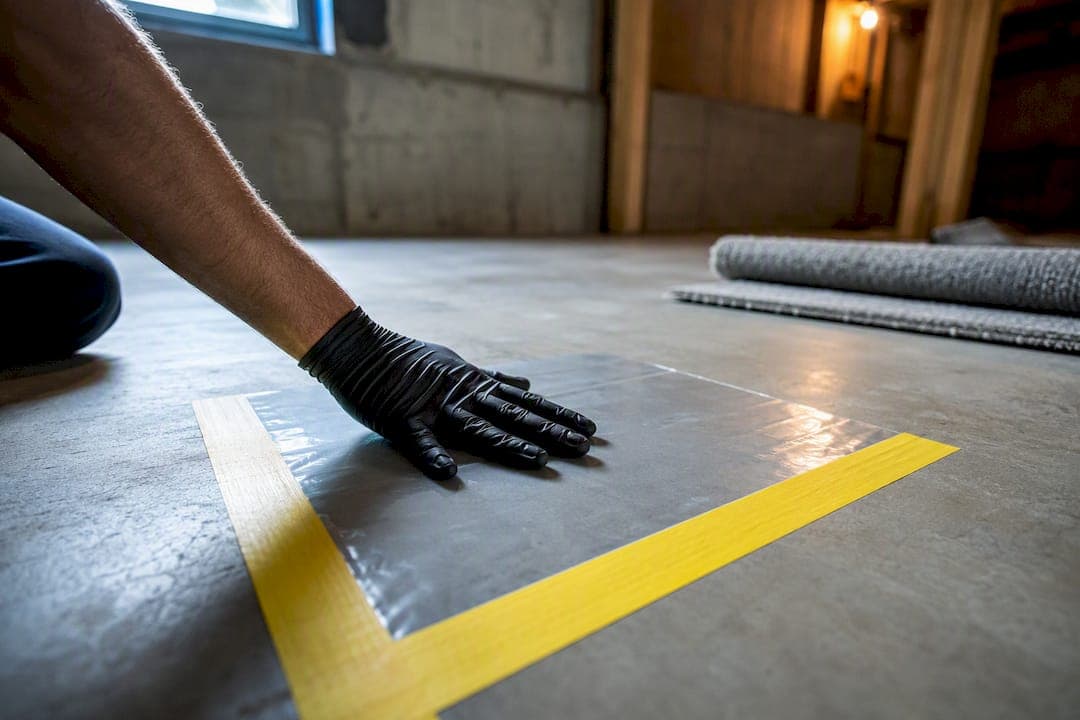
- Tape a square of plastic sheeting to the slab and check it after 48 hours. Condensation underneath signals moisture is escaping through the concrete.
- If that test raises concern, hire a contractor for calcium chloride (MVER) testing or an in-slab relative humidity probe. These give a real number, not a guess.
- Have any cracks repaired and the slab mechanically profiled with diamond grinding to the correct CSP before epoxy goes down. This step is what creates a permanent mechanical bond, not just a surface coating.
- If test results come back borderline and you still want carpet, install a vapor barrier and raised subfloor system first rather than laying carpet straight on the slab.
Pro Tip: A $15 tape test won't catch everything a $200 professional moisture reading will. If you're on the fence about spending money on testing, spend it. It's cheaper than replacing a failed floor in three years.
Cost, Lifespan, and What Triggers a Replacement
Installed epoxy typically runs higher upfront than carpet because proper prep, grinding, and multi-coat systems take skilled labor and material. Carpet costs less per square foot going in, but that gap narrows fast once you factor in what happens after a water event.
A correctly installed epoxy floor, with grinding and moisture control done right, can last a decade or more with minimal upkeep beyond regular mopping. Carpet's lifespan in a basement depends heavily on humidity control. In a consistently dry space it can last many years; in a damp one, padding degradation and mold can force replacement within a couple of seasons.
- Epoxy: higher installed cost, low ongoing maintenance, long lifespan when prep is correct
- Carpet: lower installed cost, regular vacuuming and periodic deep cleaning, shorter lifespan if moisture ever gets in
- Replacement risk should factor into your budget the same way installation cost does. A cheaper floor that fails in two years isn't actually cheaper.
Making Epoxy Feel Warmer and Softer
Epoxy doesn't have to feel like a garage floor in a living space. A few additions close most of the comfort gap without giving up any of epoxy's moisture protection.
- Layer area rugs with non-staining rug pads over seating and lounge zones
- Add anti-fatigue mats near workout stations or standing work areas
- Choose warmer color and flake blends instead of stark industrial gray
- Mix in anti-slip additives anywhere the floor gets wet, like near a laundry area
Pro Tip: Check rug pad labels before buying. Some rubber backings can discolor epoxy over time, so look for felt or PVC-free pads made for sealed floors.
Which Floor Fits Your Basement Scenario?
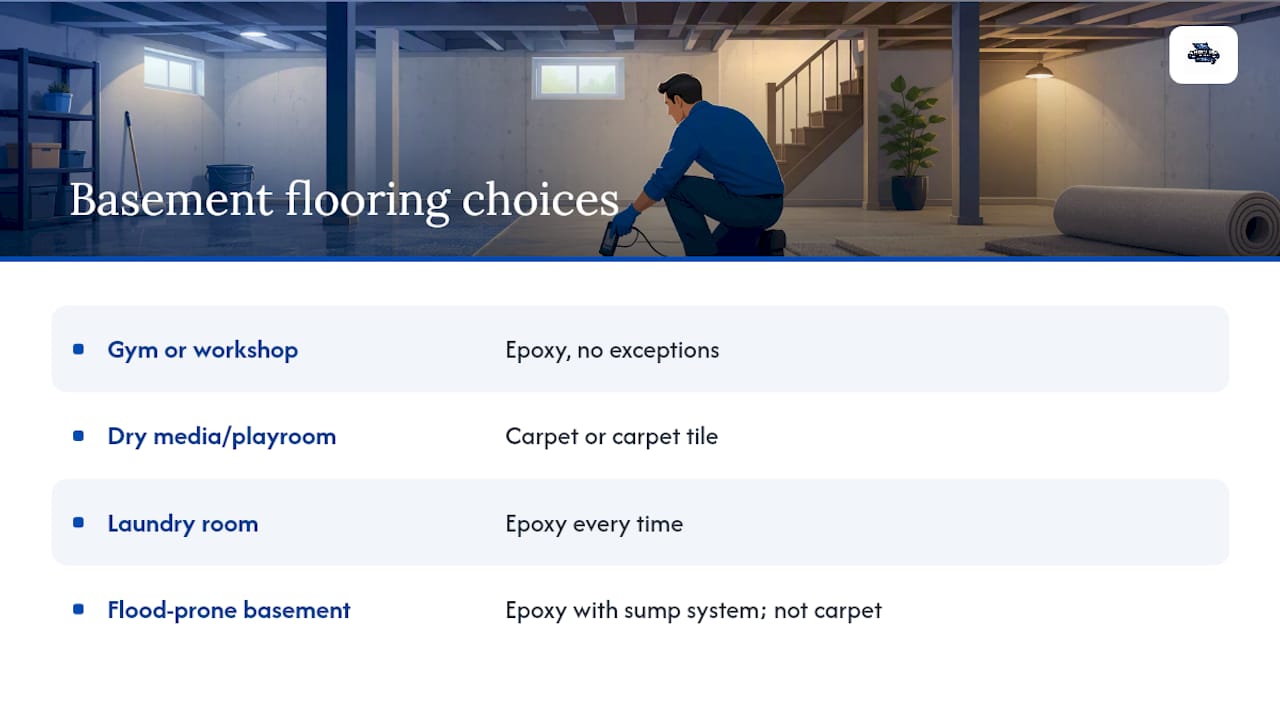
Home gym or workshop: epoxy, no exceptions. Media room or playroom in a proven dry basement: carpet or carpet tile. Laundry room: epoxy every time. Flood-prone basement of any kind: epoxy with a sump system, not carpet. Whatever you choose, test the slab for moisture first and remember that installation quality usually matters more than the material itself.
How Basement Humidity and Temperature Swings Affect Each Floor
Basements run colder and more humid than the rest of the house, and that swing hits carpet and epoxy in very different ways. Humidity that fluctuates with the seasons means basement air can hold noticeably more moisture in summer than winter, and that moisture doesn't stay in the air. It settles into whatever's on the floor.
Carpet fibers and padding absorb ambient humidity even without a direct leak. On sticky summer days, carpet in an under ventilated basement can feel damp to the touch, and that dampness is exactly what mold spores need to establish themselves in the padding. Temperature swings compound the problem: cooler basement air holds less moisture, so when humid air meets a cold slab, condensation can form underneath carpet that never even got wet from a spill.
Epoxy responds differently because it's not absorbent. Humidity swings don't degrade a properly cured epoxy surface the way they degrade carpet fiber and padding. The bigger concern with epoxy is temperature during installation, not humidity afterward. Cure chemistry slows in cold conditions, and epoxy applied below the recommended slab and air temperature can cure improperly, leading to a softer, less durable finish. Once cured, though, a quality epoxy floor shrugs off seasonal humidity changes that would otherwise seep into carpet fiber month after month.
This is one more argument for testing moisture and temperature conditions before installation, not after.
Health Considerations: Mold, Allergens, and Off-Gassing
Both materials carry health considerations worth knowing before you commit, and they're almost opposite in nature. Carpet's risk is biological. Once padding or fiber holds moisture for more than a day or two, mold and mildew can start growing in a spot you can't see until the smell shows up. Damp carpet also traps dust, pet dander, and dust mite waste deep in the pile, which is why basements with carpet often trigger more allergy symptoms than basements with hard flooring, especially for anyone with asthma or dust sensitivities.
Epoxy's health consideration is chemical, and it's front loaded rather than ongoing. Epoxy resins and hardeners release fumes during application and the initial cure period, so a basement needs real ventilation during installation and for a day or two afterward. Once fully cured, a quality epoxy floor is chemically inert and doesn't off-gas, and it gives mold nothing to grow on since there's no organic material or trapped moisture involved.
For a household with allergy or asthma concerns, that trade-off usually favors epoxy for the long run: a short ventilation window during install versus an ongoing risk of moisture-fed allergens hiding in carpet fiber for years. Anyone especially sensitive to chemical odors should plan installation for a stretch when the space can be closed off and aired out properly, which a professional installer will typically build into the project timeline anyway.
Does Epoxy or Carpet Affect Basement Resale Value?
Buyers and inspectors both treat basement flooring as a signal of how well the whole space was maintained, and moisture damage is the detail that spooks them fastest. A basement with visible carpet staining, a musty smell, or any hint of past water damage raises red flags during a walkthrough even when the actual problem was minor and long resolved.
Epoxy tends to read as a deliberate upgrade, especially in basements set up as home gyms, workshops, or flex spaces. It signals that moisture was addressed rather than covered up, and a clean, sealed floor doesn't carry the same "what's hiding underneath" suspicion that older carpet can raise. That said, epoxy's resale benefit depends on the space's intended use. A finished basement styled as a family room might still show better to buyers with an area rug over a warmer-toned floor than with bare epoxy, which is one more reason a hybrid approach, sealed floor plus rugs, often wins over an all-or-nothing choice.
Carpet's resale impact splits sharply based on condition and history. Fresh carpet tile in a basement with no moisture history reads as a normal, well-kept finished space. Older carpet, any visible staining, or a seller disclosure mentioning past basement water intrusion can knock real dollars off a buyer's offer or trigger a flooring allowance request during negotiation. If resale is a near-term concern, moisture-resistant flooring in at least the functional zones of the basement is generally the safer investment.
The Show Me Epoxy Take on Basement Floors
Diamond grinding to the correct concrete surface profile, not just a light sanding, is what actually creates the mechanical bond that keeps epoxy from peeling or bubbling later. We build every basement project around that step, plus high-quality materials matched to local humidity swings. Clients consistently report fast turnarounds and floors that hold up. A professional moisture evaluation before install is worth the cost precisely because it catches the problems a homeowner's tape test can't.
— Stephen
Get a Moisture Check and Quote for Your Basement Floor
If your basement has any history of dampness, or you just want a straight answer instead of guessing, a professional moisture evaluation settles the question fast. Showmeepoxy is the alternative to gambling on a coating kit or a carpet install that might fail in a wet basement: our diamond-grinding prep and moisture testing catch the problems a DIY tape test misses, before they turn into a failed floor.

Every project starts with an honest look at your slab's moisture readings and current condition, not a sales script. From there, we walk through material options, coat systems, and realistic timelines based on how the space gets used. If you're in Mid-Missouri and ready to stop guessing about your basement floor, visit the basement epoxy flooring service page to request a free quote and schedule a moisture check.
Sources
- Moisture in basements: causes and solutions — University of Minnesota Extension
- Basement flooring ideas — The Spruce
- Basement concrete and epoxy guidance — ConcreteNetwork
FAQ
Is Epoxy a Good Idea for a Basement Floor?
Yes, for most basements, since epoxy seals the slab against moisture and resists the mold problems carpet is prone to. It works especially well in basements with any history of dampness or heavy use, like gyms or workshops.
What Type of Flooring Is Best for a Basement Over Concrete?
Epoxy is generally the strongest all-around choice over bare concrete because it bonds directly to the slab and resists moisture, while carpet tile is a reasonable option in basements with a proven dry history and a moisture barrier underneath.
What Are the Drawbacks of Using Concrete Epoxy?
Epoxy can feel cold and hard underfoot, gets slippery when wet without an anti-slip additive, and needs correct cure temperatures and proper slab prep to avoid peeling or bubbling later.
Is It Better to Have Carpet or LVP in a Basement?
Carpet offers more warmth and sound absorption, but LVP and epoxy both handle moisture better, so the right pick depends on whether comfort or moisture protection matters more for that specific room.