
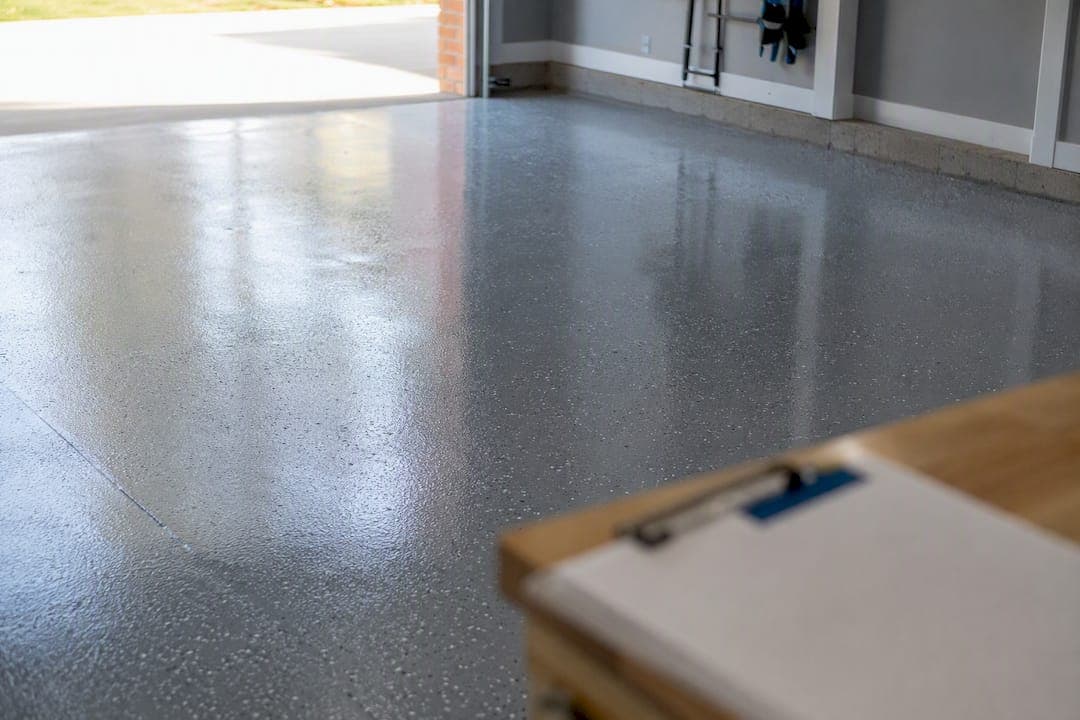
An epoxy floor warranty is only as good as two things: how long the workmanship is covered, and how narrow the exclusions are. Material warranties from manufacturers typically run just 1 year and exclude labor entirely. Workmanship warranties from installers vary widely, from 3 years to 10 years, with some companies offering conditional lifetime coverage. To get real protection, you need both in writing, plus clarity on remedies.
Before you sign anything, verify:
- Whether the warranty is material only, workmanship only, or both
- The exact duration and what triggers the clock (install date vs. final inspection)
- What remedy you get: repair, recoat, or material replacement only
- Which exclusions apply (moisture, substrate cracking, chemical damage, normal wear)
- Whether coverage transfers if you sell the property
Key Takeaways
A meaningful epoxy floor warranty combines a written workmanship warranty of at least 3 years with clear, narrow exclusions, not just a long duration on paper.
| Point | Details |
|---|---|
| Material vs. workmanship | Material warranties cover product defects for about 1 year; workmanship warranties cover installer errors and matter more. |
| Duration varies widely | Expect 1-year product coverage, 3 to 5-year workmanship packages, or up to 10 years from confident installers. |
| Exclusions reveal risk | Moisture, substrate cracking, chemical damage, and missed maintenance are the most common reasons claims get denied. |
| Keep documentation | Store the written warranty, photograph the floor periodically, and log every inspection to support future claims. |
| Prep quality drives warranty strength | Showmeepoxy's diamond grinding and moisture testing reduce the failures that most often void a warranty claim. |
Table of Contents
- Understanding Your Epoxy Floor Warranty: Material vs. Workmanship
- How Long Should an Epoxy Warranty Last?
- Exclusions That Void an Epoxy Warranty Claim
- Keeping Your Warranty Valid and Filing a Claim
- How Show Me Epoxy Builds Floors Worth Warrantying
- Editorial Take: What the Fine Print Actually Tells You
- Get a Warranty Built on Solid Prep, Not Just Paper
- Sources
Understanding Your Epoxy Floor Warranty: Material vs. Workmanship
Two separate promises hide inside most epoxy flooring contracts, and confusing them is where homeowners get burned. A material warranty comes from the manufacturer and covers defects in the product itself, things like resin that never cures properly or pigment that separates in the can. MAPEI's own cementitious and resin flooring product warranty runs a typical 1 year and excludes labor, substrate failure, moisture, and improper installation outright. That means if the crew botches the application, the manufacturer isn't paying for it.
A workmanship warranty comes from the installer and covers the application: adhesion failures, bubbling, peeling caused by prep mistakes rather than product defects. This is the coverage that actually protects your investment, because installation error is the far more common failure mode than defective epoxy.
- Material warranty protects against manufacturing defects only, usually for 1 year, with labor costs on you even if a claim is approved.
- Workmanship warranty protects against installer error, adhesion failure, and application mistakes, with terms ranging from a few years to a decade or more.
- Remedies are limited either way. Westcoat's general epoxy warranty caps its remedy at material replacement or reimbursement, and specifically disclaims consequential damages, so a flooded basement caused by a coating failure won't get you compensation for ruined belongings.
A strong workmanship warranty matters more than a strong material warranty, because it's the one that actually covers the mistakes most likely to cause a floor to fail.
How Long Should an Epoxy Warranty Last?
Expect a wide spread here, and don't assume longer automatically means better. Product-only warranties commonly sit at 1 year. Installer workmanship packages often run 3 to 5 years for standard residential jobs, with some companies offering 10-year workmanship coverage, like the 10-year limited warranty some installers publish for adhesion failures tied to installation defects. "Limited lifetime" warranties exist too, but they almost always come loaded with conditions: scheduled inspections, mandatory maintenance topcoats, and proof of continuous ownership.
- 1 year: typical product-only material warranty
- 3–5 years: common professional workmanship package, sometimes tiered by price
- 10 years: available from installers confident in their surface prep
- Limited lifetime: conditional, usually requiring documented maintenance every 2 to 4 years
A workmanship warranty tied to diamond grinding and moisture testing, like the 5-year coverage some installers offer, tends to hold up better under a claim than a longer warranty with vague prep standards, because the failure modes it's built to prevent were addressed before the coating ever went down. For a standard residential garage or basement job, a 3-year workmanship warranty is a reasonable floor. Anything shorter suggests the installer isn't confident in their own prep work.
Exclusions That Void an Epoxy Warranty Claim
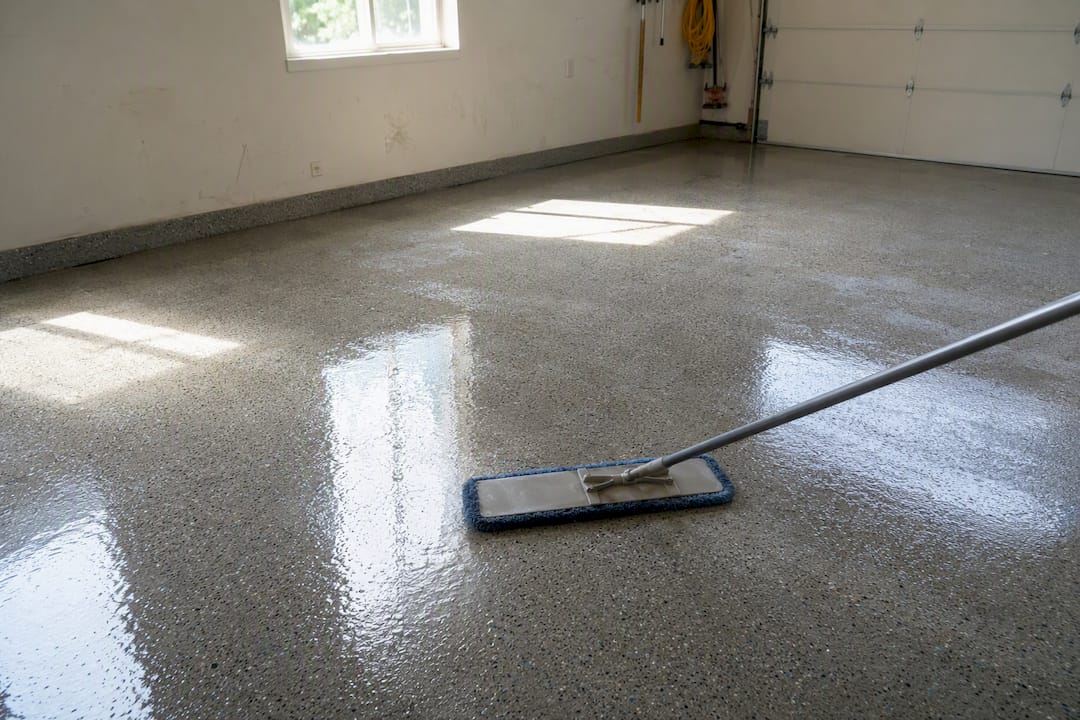
Every epoxy warranty carries exclusions, and most of them exist because they're the most common causes of failure. Substrate problems top the list: moisture vapor coming up through concrete, low-PSI or crumbling slabs, structural cracking, and efflorescence (the white mineral deposits that signal ongoing moisture movement). If your slab has any of these issues and it wasn't addressed before the coating went on, the warranty is likely void from day one.
Owner actions cause the second wave of denied claims:
- Chemical spills left untreated (brake fluid, battery acid, deicing salts)
- Dragging heavy equipment or dropping sharp objects that gouge the surface
- Using stripping chemicals or abrasive cleaners not approved for epoxy
- Pressure washing at settings that undercut the topcoat
Then there are the administrative traps that void a legitimate claim on a technicality: a notice window of just 30 to 90 days from when you first notice damage, mandatory maintenance topcoats you never scheduled, or a non-transferable clause buried in paragraph six. Some warranties even require you to purchase specific cleaning products to stay eligible, a detail easy to miss until you're filing a claim and discover you used the wrong bottle.
Pro Tip: Ask your installer for the exact list of approved cleaning products in writing before your first mop. "Use a neutral cleaner" isn't specific enough to prove compliance later.
Keeping Your Warranty Valid and Filing a Claim
Protecting your coverage starts before the crew even shows up. Get the full warranty document in writing, not a verbal promise, and ask for the manufacturer's product data sheet so you know exactly what's covered. Confirm who pays for moisture mitigation or additional grinding if the inspection turns up substrate problems, because those costs can surprise homeowners mid-project.
Once the floor is installed:
- Store the warranty document and product data sheet somewhere you'll actually find them later.
- Follow the approved maintenance schedule for cleaning and any recommended topcoat refresh.
- Photograph the floor periodically, especially after any spill or heavy use event.
- Keep records of every inspection the installer or manufacturer performs.
If something does go wrong, most warranties follow a similar pattern: notify the installer in writing within the stated window, submit photos of the damage, and expect an onsite inspection before any remedy gets approved. The typical outcome is repair or recoat, not a full tear-out and replacement, so set expectations accordingly.
How Show Me Epoxy Builds Floors Worth Warrantying
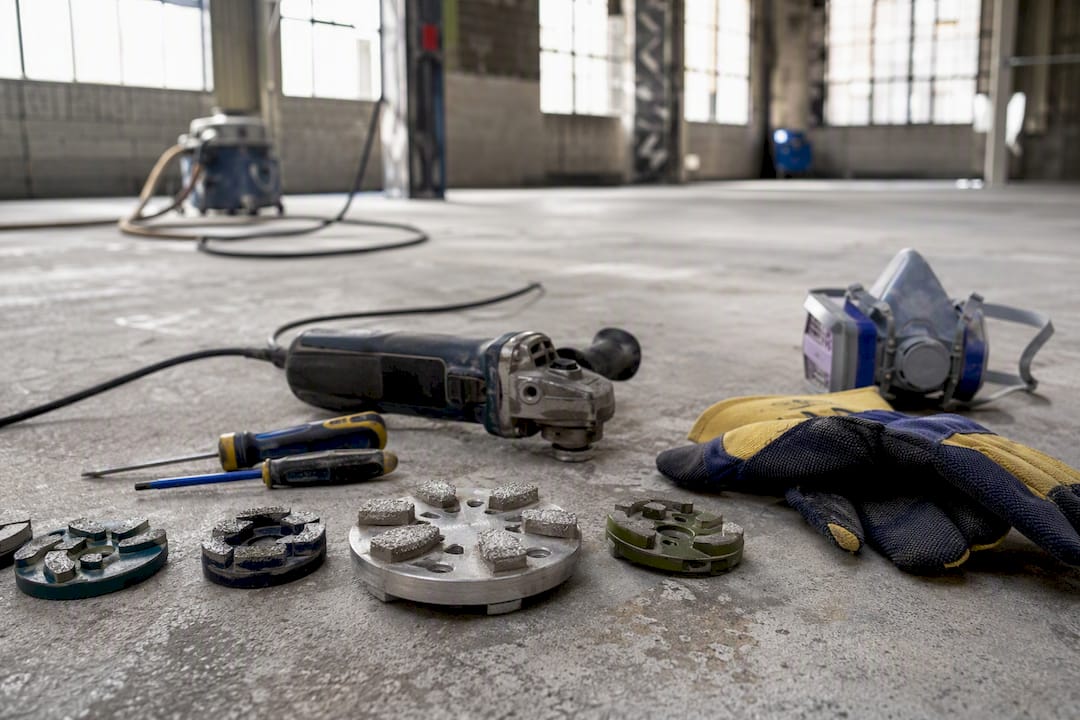
A warranty is only as strong as the surface underneath it, which is why Showmeepoxy leads every job with diamond grinding rather than a quick acid etch. Grinding removes laitance and opens the concrete's pore structure, giving the epoxy a mechanical bond that resists the delamination most warranty claims are actually about.
Before any coating goes down, Showmeepoxy tests for moisture and addresses it, since moisture trapped under a coating is one of the most common reasons manufacturer warranties get voided. The process includes:
- Diamond-ground surface prep for permanent mechanical adhesion
- Moisture testing before any product is applied
- Industrial-grade epoxy and polyaspartic materials suited to Missouri's humidity swings
- Written contract terms and scheduled maintenance recommendations
The floors that fail warranty inspections almost always failed at the prep stage, not the pour. Grinding and moisture testing aren't extras. They're the difference between a warranty that pays out and one that gets denied on a technicality.
Showmeepoxy documents each step and puts warranty terms directly into the signed contract, so homeowners aren't left guessing what's covered if a problem ever surfaces.
Editorial Take: What the Fine Print Actually Tells You
Most warranty advice online treats duration as the whole story. Ten years sounds better than three, so ten years must be the better deal. That framing misses the point entirely. A 10-year workmanship warranty with vague maintenance requirements and a 30-day notice window is worth less than a 3-year warranty with clear terms and a company that answers the phone.
The real signal isn't the number on the page. It's whether the exclusions are specific enough that you could actually explain them to a friend, and whether the prep work behind the warranty matches the claim being made. A company that skips diamond grinding and still offers a lifetime warranty is betting you'll never test it. A company that grinds, tests for moisture, and offers 5 years is making a promise it can actually keep.
If you take one thing from this checklist, take this: read the exclusions before the duration. The exclusions tell you what the company thinks will go wrong. The duration just tells you how long they're willing to bet against it.
— Stephen
Get a Warranty Built on Solid Prep, Not Just Paper
A warranty is only as trustworthy as the floor underneath it, and that's where Showmeepoxy separates itself from installers who skip straight to the coating. Every job starts with diamond-ground surface prep and moisture testing, the two steps most responsible for the delamination and substrate failures that void weaker warranties elsewhere.

If you're comparing quotes for a garage, basement, or commercial floor anywhere in Mid-Missouri, ask each installer what their prep process actually involves before you compare warranty lengths. Showmeepoxy backs its installations with written terms that spell out coverage clearly instead of burying it in fine print. Use the free cost calculator to get a ballpark for your space, or reach out through Showmeepoxy's contact page to schedule an inspection and get warranty terms in writing before you commit.
Sources
- Epoxy Coat System General Warranty – Westcoat Specialty Coating Systems
- Cementitious and Resin Flooring Systems 1-Year Product Limited Warranty (MAPEI)
- Epoxy Flooring Warranty Orlando | 1/3/5-Year Packages | A1 Epoxy
- 10-Year Epoxy Flooring Warranty | SurfacePro Epoxy Flooring Inc
- 5-Year Epoxy Flooring Warranty | Our Guarantee | Deluxe Coating