
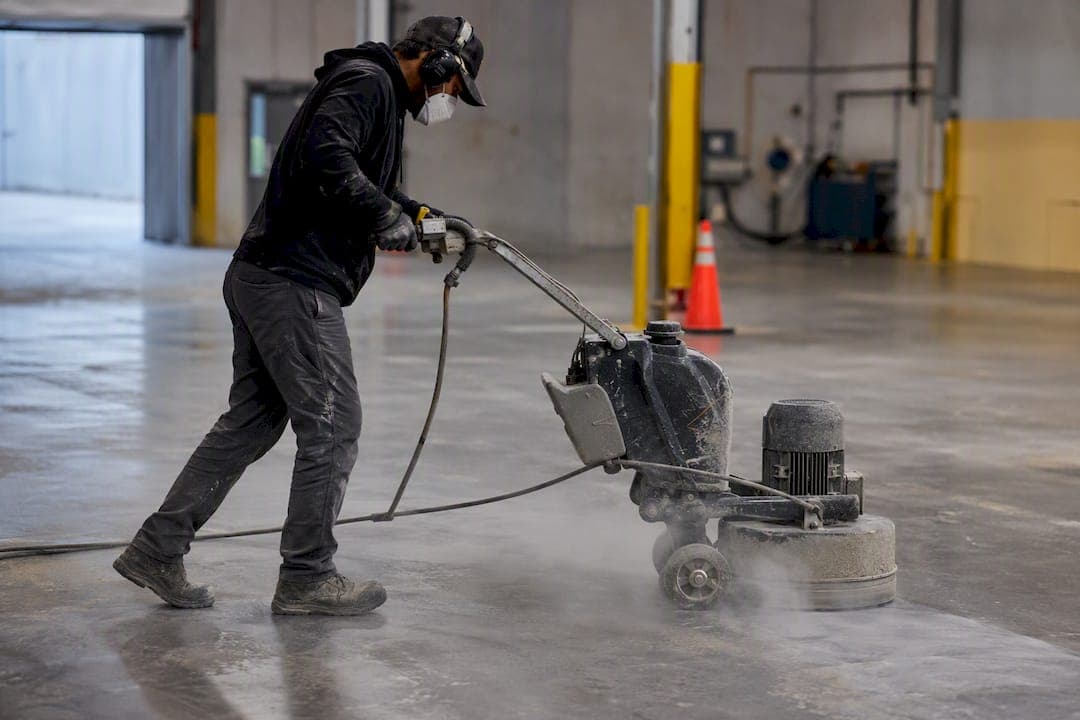
For most warehouses, a mid- to high-build epoxy system with an aggregate broadcast is the right call for forklift aisles and general storage. It handles heavy point loads, resists chemical spills, and holds up under years of daily traffic while giving you a slip-resistant surface that meets safety expectations. The single best next step before you sign any contract: require ASTM moisture testing and confirm your contractor specifies mechanical surface profiling to ICRI CSP 3, either shotblasting or diamond grinding.
Skip that step and you're gambling with a floor that can delaminate within two years regardless of how good the epoxy itself is.
When you request quotes, ask for these three things up front:
- A written moisture test report (ASTM F1869 or F2170) with pass/fail thresholds stated
- The specific surface-prep method (shotblast or diamond grind) and target ICRI profile
- Dry film thickness (DFT) per layer, in mils, for primer, build coat, and topcoat
Pro Tip: Get the moisture test results in writing before demolition of your old flooring or any coating begins. Once concrete is covered, retesting means tearing out work you already paid for.
Key Takeaways
Warehouse epoxy flooring succeeds when contractors combine ICRI CSP 3 mechanical surface prep with documented moisture testing and a system matched to each zone's traffic and chemical exposure.
| Point | Details |
|---|---|
| Prep determines lifespan | Shotblasting or diamond grinding to ICRI CSP 3 matters more than the epoxy brand you choose. |
| Test moisture before coating | Require ASTM F1869 or F2170 results in writing before any coating is applied. |
| Match system to zone | Use high-build epoxy with aggregate broadcast for aisles, urethane cement for freezers and battery rooms. |
| Compare line-item bids | Ask for prep, testing, materials, DFT, and warranty terms broken out separately, not lump-sum pricing. |
| Choose documented prep | Show Me Epoxy uses diamond-grinding prep, industrial-grade materials, and documented moisture testing on Missouri commercial projects. |
Table of Contents
- What Types of Warehouse Epoxy Flooring Systems Exist?
- Which Epoxy System Fits Each Warehouse Zone?
- Why Do Surface Prep and Moisture Testing Determine Success?
- How Long Does Warehouse Epoxy Flooring Installation Take?
- What Does Warehouse Epoxy Flooring Cost per Square Foot?
- How Do You Maintain an Epoxy Warehouse Floor?
- What Safety and Compliance Standards Apply to Warehouse Floors?
- How Should You Choose a Warehouse Epoxy Flooring Contractor?
- Why Surface Prep Method Matters More Than the Epoxy Brand
- Get a Warehouse Epoxy Flooring Quote from Show Me Epoxy
- Sources
What Types of Warehouse Epoxy Flooring Systems Exist?
Not every epoxy system is built the same way, and picking the wrong one for your traffic pattern is the most common reason warehouse floors underperform. Here's what you're actually choosing between:
- Thin film (two-coat) epoxy: A primer plus one topcoat, roughly 4–8 mils total. Fine for light-traffic storage areas but wears fast under forklifts.
- High-build epoxy: Thicker single or multi-coat system, often 12–19 mils, built for sustained heavy traffic and repeated impact.
- Self-leveling epoxy: Poured to a uniform thickness, smooths out minor substrate imperfections, and gives a seamless look favored in cleanrooms and food-adjacent areas.
- Epoxy chip/flake broadcast: Aggregate or colored chips broadcast into a wet base coat, then sealed with a topcoat. Adds texture and slip resistance.
- Polyaspartic: A faster-curing polymer, often applied as a topcoat over epoxy or as a standalone system where downtime has to be minimal.
- Cementitious urethane: A urethane cement system used where thermal shock, extreme chemical exposure, or wash-down cycles rule out standard epoxy.
Epoxy remains the most common warehouse coating because it balances adhesion, chemical resistance, and cost better than the alternatives. Polyaspartic earns its premium when you can't afford a week of downtime. Urethane cement wins in freezers and heavy chemical-processing zones where epoxy alone would crack or degrade over time.
Which Epoxy System Fits Each Warehouse Zone?
Different areas of the same facility need different specs, and treating your whole warehouse as one uniform floor is how budgets balloon on repairs later. Match the system to the zone:
- Forklift-heavy aisles: High-build epoxy with a thicker film build and aggregate broadcast for traction and wear resistance.
- Loading docks: High-build epoxy or urethane cement if exposed to temperature swings and frequent water intrusion.
- Battery-charging rooms: Chemical-resistant epoxy topcoat rated for acid exposure at an appropriate thickness.
- Cold storage/freezers: Urethane cement, since standard epoxy can crack under repeated thermal cycling.
- Food-adjacent or processing areas: Self-leveling epoxy or urethane cement with USDA-acceptable, seamless finishes.
- Breakrooms and offices: Thin film or standard epoxy at 4–8 mils is plenty; no need to overspend here.
Film thickness and aggregate choice aren't cosmetic decisions. A relatively thin coat in a forklift aisle wears through faster than a thicker system lasts, and skipping aggregate broadcast in a wet-prone zone is a slip claim waiting to happen.
Why Do Surface Prep and Moisture Testing Determine Success?
Surface preparation, not the epoxy brand or price point, is what actually determines how long your floor lasts. Mechanical profiling to ICRI CSP 3, achieved through shotblasting or diamond grinding, opens the concrete's pore structure so epoxy mechanically keys into the slab rather than sitting on top of it. Chemical etching alone can't create that bond, and floors prepped that way tend to fail within a couple of years no matter how premium the topcoat is.
Moisture is the other half of the equation. Two tests matter here:
- ASTM F1869 (calcium chloride): Passes at moisture vapor emission of 3 lb per 1,000 square feet per 24 hours or less.
- ASTM F2170 (in-situ RH probe): Passes at 75% relative humidity or less.
If your slab fails either test, you are not out of options. A moisture mitigation primer typically adds $1 to $2 per square foot and about 24 hours of cure time, converting an otherwise unsuitable slab into a viable substrate. Cracks and joints need repair before any coating goes down, and badly spalled or contaminated concrete may need scarifying ahead of shotblasting.
Pro Tip: Ask for photos of the moisture test locations and the actual printed test results, not just a verbal "it passed." Reputable contractors document this without being asked twice.
How Long Does Warehouse Epoxy Flooring Installation Take?
A typical installation for a medium-size warehouse runs 4 to 7 days from prep to final cure, longer if moisture mitigation is required. Here's the general sequence:
- Surface prep: Shotblast or diamond grind, then HEPA vacuum to remove all dust and debris.
- Primer coat: Roughly 2–3 mils, seals the profiled concrete and, if needed, includes a moisture barrier additive.
- Build coat: The workhorse layer, typically 5–8 mils, delivering most of the floor's durability.
- Aggregate broadcast (optional): Chips or sand cast into the wet build coat for texture and slip resistance.
- Topcoat: Another 5–8 mils, sealing the aggregate and providing chemical and UV resistance.
- Cure: Foot traffic is usually safe within 24 hours; full forklift loading typically waits about 7 days.
Polyaspartic topcoats change that math, sometimes allowing return to service in a single day, but at a higher material cost. Temperature and humidity swings during application can stretch cure times, so scheduling around your facility's HVAC conditions matters more than most managers expect.
What Does Warehouse Epoxy Flooring Cost per Square Foot?
Budget systems cost less initially but wear out sooner, while premium systems cost more but last longer. That tradeoff shows up clearly in service-life data: budget single-coat builds last roughly 3 to 5 years, mid-tier two-coat systems run 7 to 10 years, and high-build epoxy or polyaspartic systems can go 12 to 15 years or more under forklift traffic.
The line items that actually move your total price:
- Surface prep intensity: Heavy grinding or crack repair adds labor hours before any coating is applied.
- Moisture mitigation: Add roughly $1 to $2 per square foot if your slab fails testing.
- Film build and aggregate: Thicker DFT and chip broadcast both add material cost.
- Warranty coverage: Longer warranties usually reflect more confidence in the prep work, not just marketing.
When comparing bids, insist on line items for prep, testing, materials, and DFT rather than a single lump sum. Show Me Epoxy's cost calculator is a fast way to get a preliminary $/sq ft range before you start collecting formal quotes.
How Do You Maintain an Epoxy Warehouse Floor?
Maintenance is simple, but skipping it shortens your floor's life faster than most managers realize. Daily sweeping and prompt spill cleanup prevent grit from grinding into the topcoat. A monthly neutral-pH wash keeps chemical residue from building up in high-traffic zones. An annual inspection catches wear patterns before they become bare spots needing full recoat.
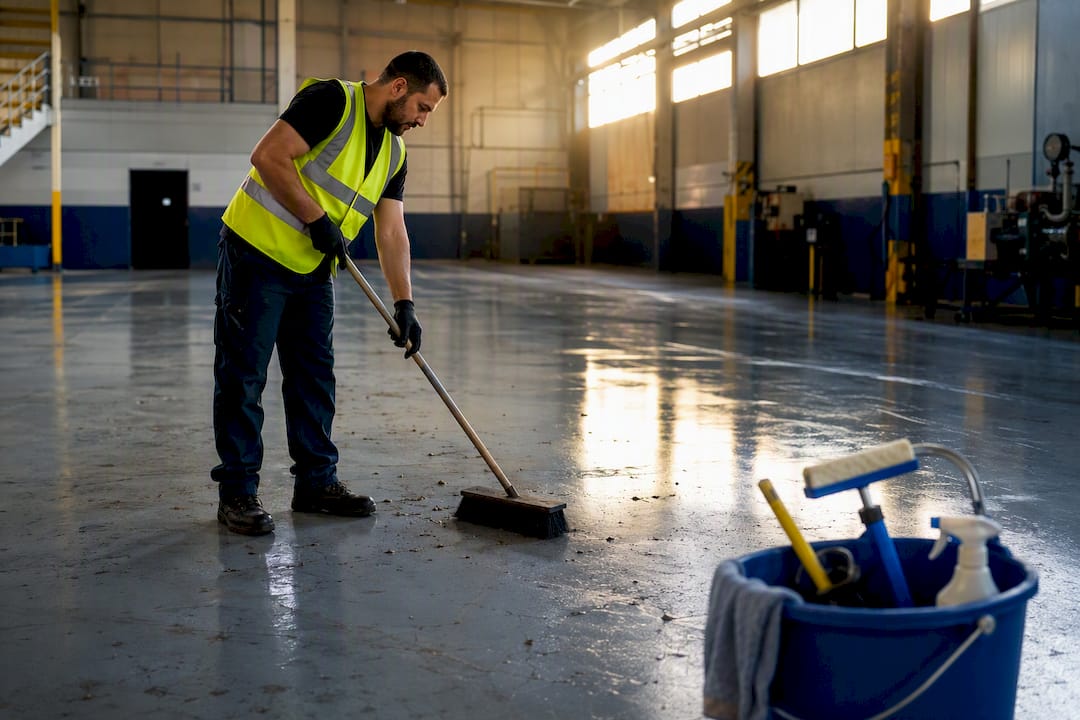
Poor prep and unmitigated moisture vapor emission (MVE) are the two things that shorten lifespan faster than anything else, cutting a 10-year system down to 3 or 4 years in the worst cases. Localized damage, like a chemical burn or gouge, can usually be spot-repaired. Widespread wear across an aisle means it's time to recoat the whole zone rather than patch it.
What Safety and Compliance Standards Apply to Warehouse Floors?
Slip resistance is measured by static coefficient of friction, and most facilities target 0.5 or higher when dry to align with OSHA expectations. Aggregate broadcast and textured chips are the standard fix for aisles prone to wet or oily conditions, and they extend wear life by spreading contact across a textured surface rather than a smooth one.
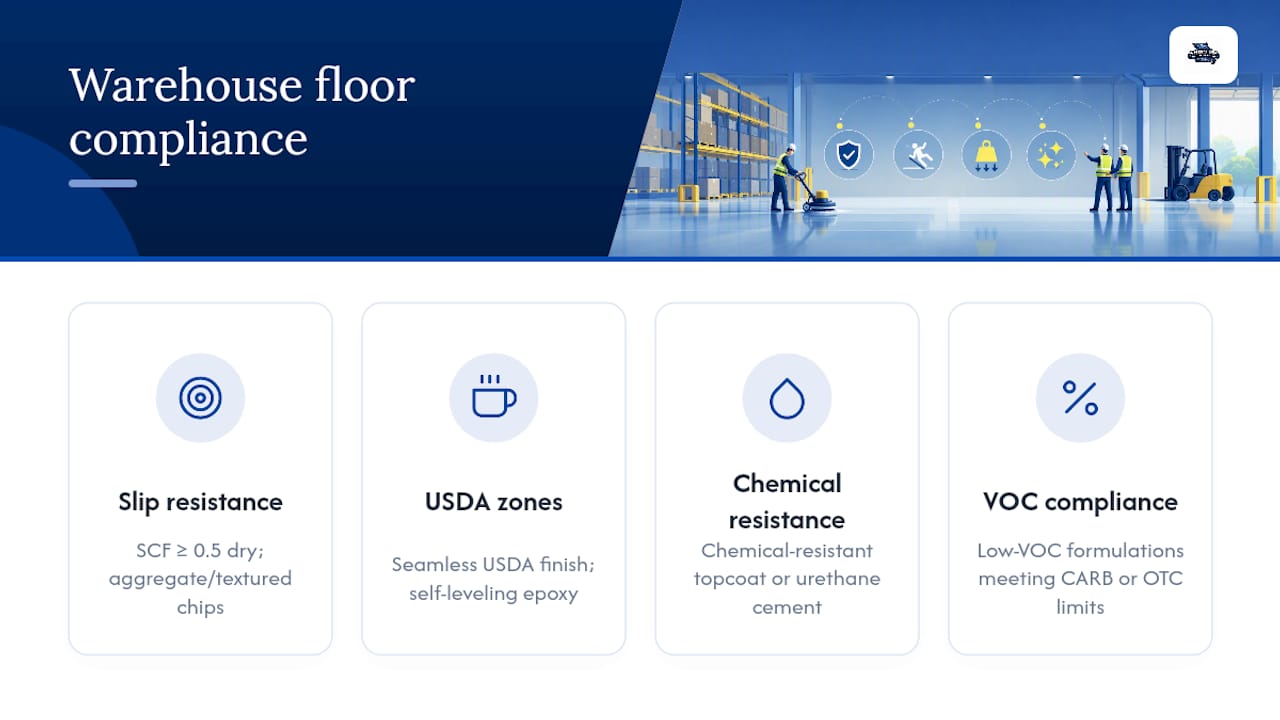
Food-adjacent areas often need USDA-acceptable, seamless finishes. Self-leveling epoxy handles most of these applications, though urethane cement takes over where wash-down cycles or steam cleaning are routine. Battery rooms and areas with strong acids or chlorinated chemicals need a chemical-resistant topcoat or urethane cement rather than standard epoxy, which can degrade under sustained exposure. If sustainability matters to your facility's procurement policy, ask contractors for low-VOC formulations compliant with CARB or OTC limits.
How Should You Choose a Warehouse Epoxy Flooring Contractor?
The documentation a contractor provides tells you more about the finished floor than their sales pitch does. Require these before signing anything:
- Written moisture test reports (ASTM F1869 or F2170) with pass/fail numbers
- The exact surface-prep method and target ICRI CSP profile
- DFT specifications per layer and the materials being used
- A written warranty with clear coverage terms
Ask these questions during the bid process:
- What prep equipment will you use, and how do you contain dust on-site?
- What's your contingency plan if moisture testing fails?
- What are the realistic cure times before foot and forklift traffic?
- What does your warranty actually cover, and for how long?
Line-item bids that separate prep, testing, materials, and warranty terms are far easier to compare than lump-sum numbers. Red flags include vague language around "surface preparation," no mention of moisture testing at all, unrealistic same-day cure promises for standard epoxy, and bids priced well below competitors with no warranty attached.
Why Surface Prep Method Matters More Than the Epoxy Brand
Show Me Epoxy builds every commercial project around diamond-grinding surface prep because a mechanical profile creates a permanent bond that chemical etching simply can't match. That single decision, made before a drop of epoxy goes down, is the biggest factor in whether a warehouse floor lasts 5 years or 15.
Projects use industrial-grade materials, documented moisture testing, and installation experience built specifically around Missouri's climate swings, backed by local service and consistently strong customer reviews.
Pro Tip: Insist on prep photos and printed ASTM test results as part of your written contract, not a verbal promise. If a contractor hesitates to document this, that's your answer.
An Installer's Take on What Managers Get Wrong
The biggest surprise on most job sites isn't the epoxy. It's discovering moisture problems mid-project that testing would have caught upfront. One habit fixes this: require test results before you approve any schedule.
Get a Warehouse Epoxy Flooring Quote from Show Me Epoxy
Show Me Epoxy installs commercial and industrial epoxy systems built around the same diamond-grinding prep and moisture documentation this article recommends, so you're not relying on a contractor's word alone. Every commercial quote includes the surface-prep method, moisture test plan, DFT specs, and warranty terms in writing before work starts.

When you request a quote, ask specifically for the diamond-grinding process, industrial-grade material specs, and documented moisture test results as part of the proposal. If you want a fast ballpark before scheduling a site visit, run your square footage through the free cost calculator to see where your project likely lands. For a formal estimate tied to your facility's actual traffic zones and chemical exposure, contact Show Me Epoxy to schedule a walkthrough.
Sources
Review the CompositePaint specifier's guide for ASTM moisture thresholds and the ISHN anti-slip guide for OSHA-aligned slip-resistance methods.
- Epoxy Floor Coatings for Warehouses: Specifier's Guide (2026) — CompositePaint
- Warehouse Floor Coating Contractor Guide: Selection, Performance, and Lifecycle Planning | Moorhouse Blog
- Types of anti-slip coatings for your warehouse floor — ISHN