
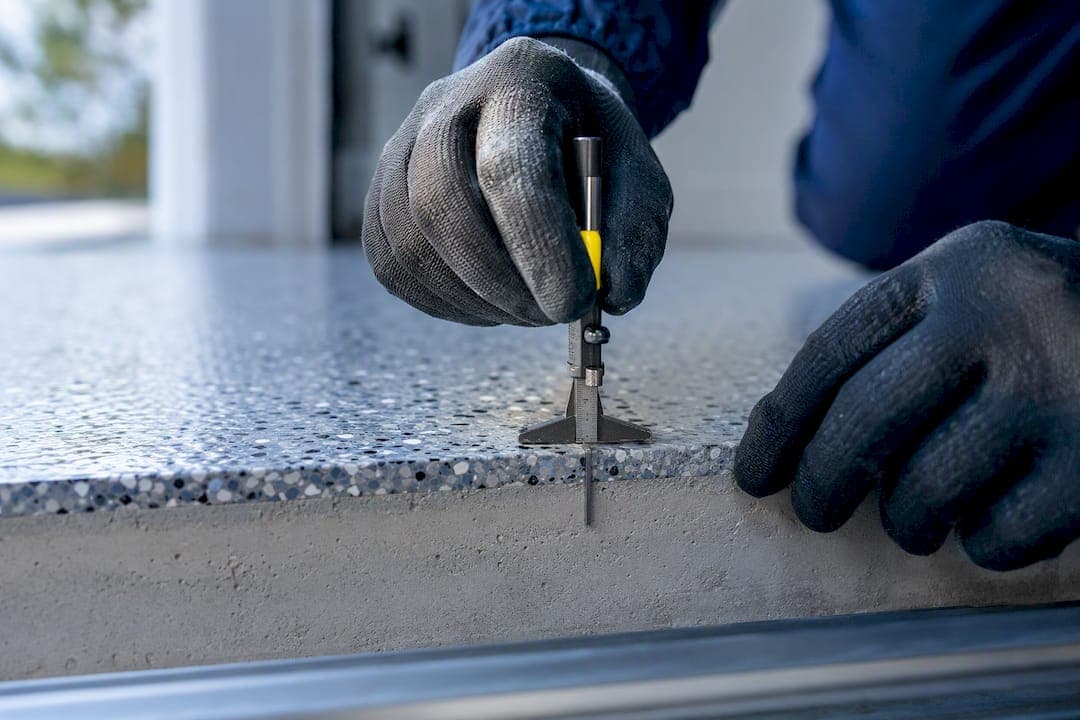
Epoxy floor thickness ranges from thin-film coatings with a few mils thickness, through standard systems with moderate thickness, up to quartz and self-leveling builds with thicker layers, and heavy-duty mortar systems that are substantially thicker (all figures in one-thousandths of an inch, so 1,000 mils equals 1 inch). The rule that actually matters: pick the thinnest tier that still handles your traffic, chemical exposure, and substrate condition. Going thicker than that just adds cost and cure time without adding value.
TL;DR:
- Thicker epoxy floors are only necessary for high-impact, chemical-resistant, or heavy industrial applications, while thinner systems suit residential or light use.
- Proper surface preparation, including grinding and moisture testing, is critical to ensure the chosen thickness adheres effectively and lasts as long as expected.
- Layers such as primer, base coat, broadcast, and topcoat determine the final mil thickness and influence the floor's impact resistance and durability.
- Over-specifying thickness for low-stress environments increases costs and curing time without providing added benefits.
- Actual system thickness in mils, confirmed by written documentation, is vital to guarantee the floor's longevity, not just the number of coats applied.
Table of Contents
- Epoxy Floor Thickness at a Glance
- What Thickness Fits Your Application
- Factors That Push Thickness Up or Down
- How Installers Actually Build That Thickness
- Prep Work Decides Whether Thickness Even Matters
- Rules of Thumb From the Field
- Get a Documented Thickness You Can Actually Verify
- Sources
- FAQ
Epoxy Floor Thickness at a Glance
Before picking a number, it helps to see how the tiers stack up against each other. Coatings, standard systems, decorative builds, and mortars each serve a different job, and the mil range tells you almost everything about what a system can handle.
| System Type | Mil Range | Inch Equivalent | Best For |
|---|---|---|---|
| Thin-film coating | 6–20 mil | 0.006–0.02 inch | Light residential floors, sealing, cosmetic refresh |
| Standard epoxy | 40–125 mil | 0.04–0.125 inch | Garages, retail, offices, light workshops |
| Quartz / decorative | 80–250 mil | 0.08–0.25 inch | Showrooms, kitchens, slip-resistant commercial floors |
| Self-leveling | 80–250 mil | 0.08–0.25 inch | Warehouses, high-traffic commercial spaces |
| Epoxy mortar | 250–500+ mil | 0.25–0.5+ inch | Manufacturing plants, loading docks, heavy industrial use |
The flooring industry's tiered breakdown backs up these ranges almost exactly, and they line up with what installers actually spec on real jobs. Notice the overlap between quartz and self-leveling. Both occupy similar mil ranges; the difference is usually decorative flake versus a smoother, more uniform surface.
What Thickness Fits Your Application
The tiers above are a starting point. Matching them to your actual floor is where the decision gets specific.
- Residential garage, light use: light to moderate thickness handles daily parking, foot traffic, and occasional dropped tools without issue.
- Residential garage, heavy use or home workshop: thicker systems with broadcast aggregate hold up better against toolboxes, dropped engine parts, and jack stands.
- Retail, office, or showroom floors: moderate thickness allows for decorative finishes and stands up to foot traffic and rolling carts.
- Workshop and warehouse floors: thicker ranges accommodate forklift traffic and wheeled pallet loads.
- Commercial kitchens, food processing, and medical facilities: thicker, chemical-resistant systems handle grease, sanitizers, and constant washdown.
- Industrial and manufacturing floors: very thick mortar or urethane cement systems are needed under heavy machinery, forklifts, and constant impact loads.
A detailed buying guide on epoxy thickness confirms this same application-based logic, and it's worth noting that jumping a tier "just to be safe" rarely pays off. A 60-mil system on a light-use garage floor costs more and cures longer for zero real-world benefit.
Factors That Push Thickness Up or Down
Substrate condition drives more of this decision than most people expect. A slab with spalling, cracks, or old coating residue often needs grinding, patching, or even a leveling layer before any epoxy goes down, which adds mils before the "real" system even starts; learn more about resurfacing approaches in concrete slab preparation resurface a concrete driveway in Florida. A clean, sound slab needs none of that.
Traffic type matters more than traffic volume. Static loads (a parked car) barely stress a coating. Dynamic loads (forklifts turning, pallet jacks dragging, dropped tools) demand a heavier build because point impacts concentrate stress in a way steady weight never does.
- Chemical exposure from oils, solvents, or cleaning agents calls for thicker film to resist penetration to the slab.
- Slip resistance from broadcast aggregate adds its own build, sometimes 10 to 20 extra mils depending on grit size.
- Decorative elements like metallic pigments or multiple flake coats stack additional layers on top of the base system.
Pro Tip: If your garage doubles as a workshop with a welding station or a lift, spec for the workshop, not the garage. Chemical spills and dropped metal don't care what you originally planned to use the space for.
How Installers Actually Build That Thickness
Thickness isn't poured in one shot. It's built in layers, and each layer has a job.
- Primer coat. Seals the concrete pores and gives the next layer something to grip. Thin, usually just a few mils.
- Base coat. The main epoxy body, often pigmented, that carries most of the color and forms the bulk of the mil count.
- Broadcast layer (if used). Quartz or colored sand is thrown into the wet base coat to add texture, slip resistance, and structural reinforcement.
- Top coat or sealer. A clear polyurethane or polyaspartic layer that adds UV stability, chemical resistance, and gloss.
The Sherwin-Williams technical guide to resin flooring draws a clear line between coatings, slurries, and mortars based on exactly this build method. One misconception worth killing outright: dumping more resin into a system without aggregate doesn't make it stronger. It often makes it more brittle, because aggregate distributes impact through the matrix the way rebar distributes stress in concrete. A thick floor with no aggregate can crack under a load a thinner, properly loaded system would shrug off.
Prep Work Decides Whether Thickness Even Matters
None of these mil ranges mean anything if the surface underneath can't hold the coating. Light-build coatings can get by with a moderate concrete surface profile, but mid-build systems need a more aggressive mechanical profile, and self-leveling or high-build systems need the most aggressive profile of all to keep from delaminating under load.
Diamond grinding is the most reliable way to hit that higher profile consistently across an entire floor, which is why it's the prep method Showmeepoxy uses on every job rather than acid etching or light grinding. Moisture testing matters just as much: a slab reading too high on a moisture test can trap vapor under a thick system and cause bubbling or bond failure months later, so mitigation steps sometimes need to happen before any epoxy goes down.
- Ask for the total system dry film thickness in mils, not just "how many coats."
- Ask what surface profile the prep method actually achieves.
- Ask for stated cure times before full traffic and vehicle load.
- Ask what the warranty actually covers, and for how long.
Pro Tip: Get the promised mil thickness written into your quote, not just described verbally. A number on paper is the only way to hold an installer accountable later.
Rules of Thumb From the Field
Match thickness to the harshest condition your floor will face, not the average one. A garage that sees monthly oil changes needs the chemical-resistant range, not the light-use range. The most common installer shortcut that shortens service life isn't skipping a coat. It's skipping the grinding step to save a day, which undercuts every mil poured on top of it.
— Stephen
Get a Documented Thickness You Can Actually Verify
Most quotes tell you how many "coats" you're getting. Few tell you the actual dry film thickness in mils, which is the number that determines whether your floor lasts five years or fifteen. System thickness documentation in writing and diamond-grind prep are recommended practices to ensure you know exactly what's going down before it goes down.

Garages, basements, and commercial spaces each call for a different build, and crews typically specify coatings individually rather than using one generic coating across every job type. If you're dealing with a damp basement slab, moisture mitigation gets built into the plan before the first grinder even starts. Ready to see what your floor actually needs? Request a free quote and get a written thickness spec, not a verbal estimate. Homeowners in Jefferson City can also check garage floor coating options directly.
Sources
- How Thick Is Epoxy Flooring: In-Depth Guide To Epoxy Floor Thickness For Residential, Commercial And Industrial Applications
- Epoxy Flooring: The Complete Guide | Sherwin-Williams
- How Thick is Epoxy Flooring: Pros, Cons, and Buying Guide - D and G Flooring
FAQ
How Much Does It Cost to Epoxy a 20x20 Garage Floor?
A 20x20 garage floor is 400 square feet, and installed costs typically run $3 to $14 per square foot depending on system thickness and prep work, putting most residential garage jobs in the $1,200 to $5,600 range.
What Is the Downside of Epoxy Flooring?
The main downsides are cure time for thicker systems, which can take up to 7 to 14 days for full traffic on high-build self-leveling floors, plus raised floor elevation and higher cost as thickness increases.
What Is the Thinnest You Can Pour Epoxy Resin?
Thin-film epoxy coatings can go as low as 6 mils, though most functional residential and commercial coatings start closer to 16 to 20 mils for adequate durability.
How Much Would It Cost to Epoxy 1,000 Square Feet?
At $3 to $14 per square foot, a 1,000 square foot floor typically runs $3,000 to $14,000, with the final number driven mostly by system thickness, surface prep needs, and any broadcast aggregate or decorative work.
Does a Thicker Epoxy Floor Always Last Longer?
Not automatically. A thick system installed over poor surface prep can delaminate faster than a properly prepped thin-film coating, which is why matching thickness to substrate condition matters as much as the mil count itself.