
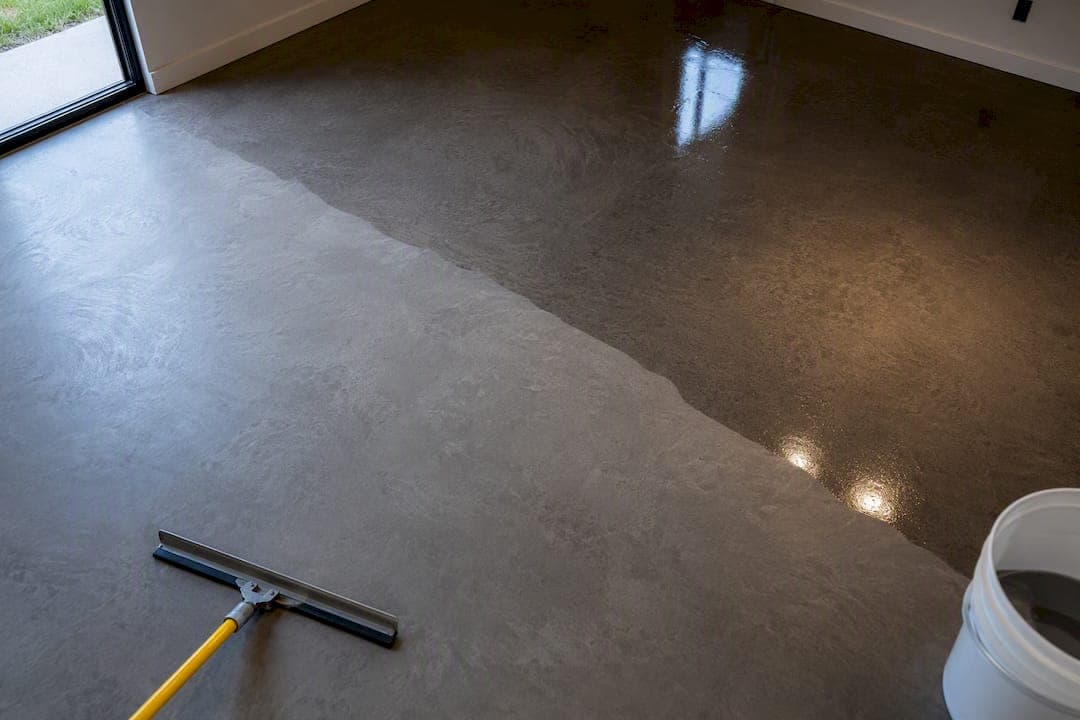
Choose epoxy when you want a durable, decorative, finished floor that shrugs off oil, chemicals, and daily abrasion. Choose a penetrating sealer when your priority is protecting the concrete itself for the long haul with almost no upkeep. For garages and basements prone to moisture, the smartest move is often both: control moisture first, then coat with epoxy and a UV-stable topcoat.
TL;DR:
- Proper surface preparation, including diamond grinding and moisture testing, is essential for epoxy to avoid peeling and bubbling issues in the future.
- Epoxy offers superior resistance to chemicals, abrasion, and customization but is non-breathable and may show cracks or amber under UV exposure if not properly topcoated.
- Sealers are less durable and typically need reapplication every few years, while a professional epoxy can last 10 to 15 years or more with correct installation.
- Over existing film-forming sealers, epoxy generally requires surface removal, while some penetrating sealers may bond without removal after testing.
- Moisture control must be addressed before applying epoxy, especially in moisture-prone areas like garages and basements, to prevent delamination and long-term failure.
Table of Contents
- Epoxy vs Concrete Sealer: How Epoxy Coatings Actually Work
- What Does a Concrete Sealer Actually Do to the Slab?
- Epoxy vs Concrete Sealer Comparison: Durability, Looks, and Cost
- Can You Put Epoxy Over a Concrete Sealer?
- How Do You Choose Between Epoxy, a Sealer, or Both?
- Why Prep Determines Whether Epoxy Survives, Not the Brand
- Ready for a Floor That Doesn't Need a Redo in Two Years?
- Sources
- FAQ
Epoxy vs Concrete Sealer: How Epoxy Coatings Actually Work
Epoxy is a two-part system. Resin and hardener mix on-site and cross-link into a rigid, film-forming layer that bonds to the concrete surface rather than soaking into it, according to Sherwin-Williams' epoxy flooring guide. A full system usually stacks three layers:
- A penetrating primer that locks onto the profiled concrete
- A pigmented color coat, often with decorative flakes or metallic pigments
- An abrasion-resistant topcoat, commonly polyaspartic or polyurethane, added for UV stability and scuff resistance
Epoxy earns its reputation on chemical resistance, seamless sanitation (no grout lines for bacteria or moisture to hide in), and near-total customization. The catch is that it doesn't breathe. Trapped moisture vapor pushes up from below and causes bubbling or delamination, and any crack in the slab underneath will eventually show through the rigid film on top.
What Does a Concrete Sealer Actually Do to the Slab?
Sealers split into two very different camps, and mixing them up is where most buying mistakes start. Penetrating sealers, like silicates and silane/siloxane blends, soak into the pores of the concrete and chemically strengthen it from within, according to RadonSeal's comparison of sealers and epoxy. Film-forming sealers, mostly acrylics and some polyurethanes, sit on top and create a thin repellent skin instead.
- Penetrating sealers: repel water and salts, leave the natural concrete look untouched, require almost no reapplication
- Film-forming sealers: add sheen and light abrasion protection but can scuff, wear thin, and block later coatings from bonding
- Shared limitation: neither category comes close to epoxy's abrasion resistance or decorative range
A penetrating sealer is a maintenance play, not a makeover. It keeps the slab healthy for decades with minimal fuss, but it won't hide stains, cracks, or discoloration the way a color-coated epoxy floor will.
Epoxy vs Concrete Sealer Comparison: Durability, Looks, and Cost
Here's where the decision actually gets made, because most homeowners are weighing the same six factors whether they realize it or not.
- Durability and abrasion resistance: A properly installed epoxy system beats every sealer category for foot traffic, tire scuffing, and dropped-tool abuse.
- Chemical and stain resistance: Epoxy resists spills sitting on the surface long enough to wipe up; sealers slow penetration but won't stop a long-term stain from setting into unsealed pores nearby.
- Moisture tolerance: Sealers protect the slab from the outside in. Epoxy protects the slab from the outside, period. It's non-breathable, so moisture vapor transmission (MVT) from below needs to be addressed before coating, not after.
- UV stability: Unprotected epoxy ambers in sunlight. An aliphatic polyurethane or polyaspartic topcoat solves that, which is why outdoor-rated epoxy kits call out non-yellowing formulas specifically for exposed surfaces.
- Aesthetics: Epoxy offers full color, flake, and metallic customization. Sealers preserve the concrete's natural gray or tinted look.
- Lifespan and cost of ownership: This is the number that surprises most people.
Acrylic film-forming sealers often need reapplication every few years in high-traffic or harsh-climate settings, based on RadonSeal's performance comparisons, while penetrating sealers can stretch that interval much longer depending on the chemistry used. A professionally installed epoxy system, by contrast, can run 10 to 15 years or more when the prep and topcoat are done right, according to ArmorGarage's flooring system guidance.
Pro Tip: Run the ten-year math before you decide. A $150 sealer job redone every two years adds up to roughly $750 over a decade, while a one-time professional epoxy install can outlast that entire span without a single recoat.
Upfront, sealers almost always cost less. Over ten years, that gap narrows fast once you factor in labor and reapplication cycles.
Can You Put Epoxy Over a Concrete Sealer?
Usually, no, not without work first. Film-forming sealers create exactly the kind of slick, non-porous surface epoxy can't grip, and most installers will tell you it has to come off mechanically before anything new goes down, per RadonSeal's compatibility notes. Some penetrating sealers that chemically harden the slab are the exception. Because they don't leave a surface film, epoxy can sometimes bond right over them, but "sometimes" means you confirm it, not assume it.
Before coating over any previously sealed floor, run through this:
- Moisture test the slab (relative humidity probe or calcium chloride test)
- Do a small adhesion test patch and let it cure fully before trusting the results
- Diamond grind if the sealer is film-forming or the adhesion test fails
- Select a primer or a compatible penetrating sealer if you're planning to coat afterward
Pro Tip: When you genuinely can't tell what was used on an existing slab, grind it. Guessing wrong costs far more in a failed epoxy job than the extra hour of prep ever will. For more on coating over an existing sealed or painted floor, see this breakdown of epoxying over existing concrete.
How Do You Choose Between Epoxy, a Sealer, or Both?
Start with how the floor actually gets used, not how it looks in a showroom photo.
- Assess exposure: Heavy vehicle traffic, chemical spills, or a desired showroom finish point toward epoxy. Light foot traffic and a preference for the natural concrete look point toward a sealer.
- Inspect the slab: Check for efflorescence, hairline cracks, and age. Run a moisture test before committing to any coating.
- Compare lifetime cost: Weigh a DIY sealer's low upfront price and repeat labor against a professional epoxy install's higher initial cost and decade-plus lifespan.
- Interview installers directly. Ask whether they diamond grind as standard practice, how they test and mitigate moisture, and what topcoat chemistry and warranty back the job.
- Match the material to the timeline: pick sealer-only for a newly poured slab still curing or a tight budget, epoxy for a finished long-term floor, and seal-then-coat when moisture control matters most.
Pro Tip: Ask any installer to walk you through their moisture mitigation plan before you ask about color options. If they can't answer that question specifically, that's a red flag worth taking seriously.
Why Prep Determines Whether Epoxy Survives, Not the Brand
Most epoxy failures I've read about trace back to two decisions made before a single drop of resin hits the floor: how the slab was profiled and whether moisture got addressed. Acid etching, the old-school prep method, leaves an inconsistent surface. Diamond grinding creates a uniform mechanical profile that gives epoxy something real to grip, and that difference shows up years later as the gap between a floor that's still flawless and one that's peeling at the edges.
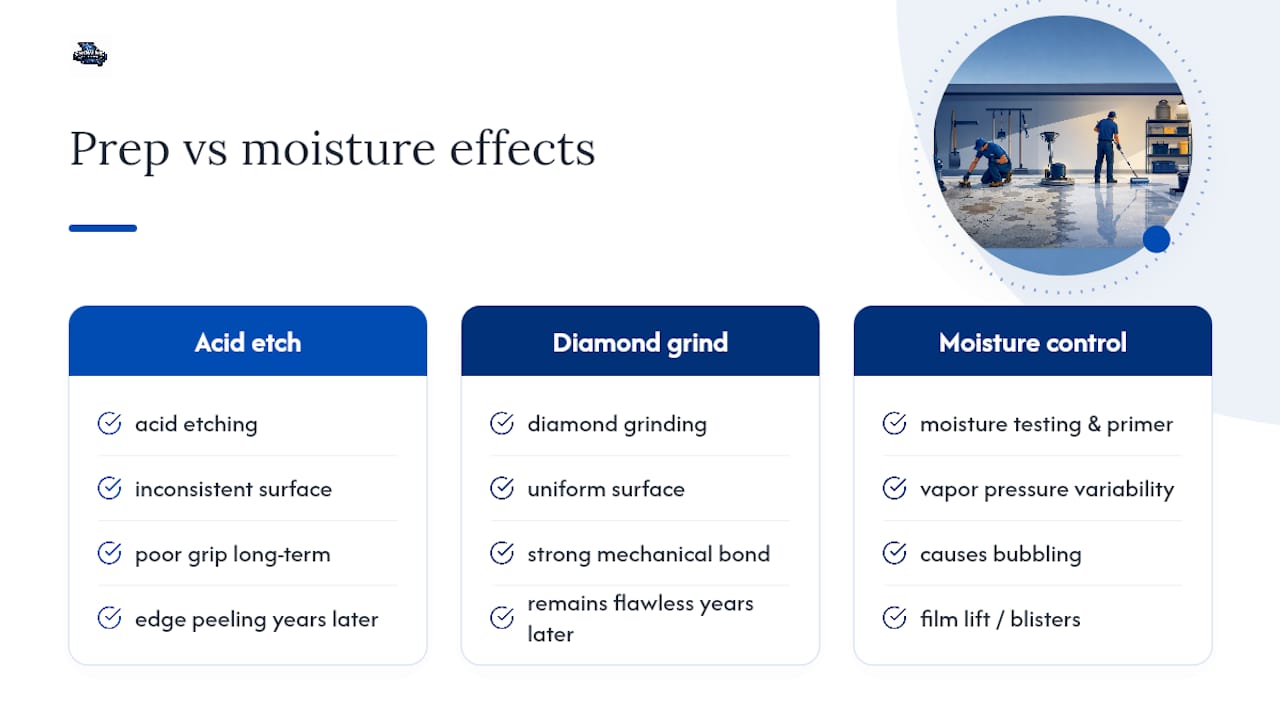
Substrate cracks don't disappear under a coating. They telegraph straight through a rigid epoxy film, sometimes within a single season. Moisture is the quieter killer. Without proper testing and a matched primer, vapor pressure from below causes bubbling that no amount of topcoat can fix after the fact.
Showmeepoxy builds every project around that sequence: assess the slab, grind it, select primers based on what the moisture testing shows, then install industrial-grade epoxy with a UV-stable topcoat when the space calls for it. Skipping any one of those steps is where most "epoxy horror story" reviews online actually start.
— Stephen
Ready for a Floor That Doesn't Need a Redo in Two Years?
A sealer buys you time. A properly installed epoxy system buys you a decade or more without touching it again, and that's a common goal in professional epoxy flooring. Every project starts with an on-site assessment and moisture testing, moves through diamond grinding for real mechanical adhesion, and finishes with industrial-grade epoxy or polyaspartic topcoats matched to how the space actually gets used.

If you're weighing a DIY sealer against a professional install, the honest answer is that professional prep is what prevents the callbacks, bubbling, and premature peeling that make sealer-and-recoat cycles look cheap until you add up ten years of labor. Homeowners can request a free quote and schedule an assessment to see what their slab actually needs before committing to either approach. For basement-specific moisture concerns, Showmeepoxy's basement epoxy flooring services start with the same moisture testing covered above.
Sources
For readers who want the technical detail behind these recommendations, Sherwin-Williams' epoxy flooring guide covers resin chemistry and substrate prep in depth. RadonSeal's sealer-versus-epoxy comparison breaks down compatibility issues between sealer types and coatings. For a contractor's view on waterproofing capabilities and resin flexibility, Sigma Painting's epoxy floor coating page is a useful outside reference.
- Epoxy Flooring: The Complete Guide | Sherwin-Williams
- Garage Floor Sealer vs Epoxy Coating: Which Is Better for You? | RadonSeal
- Epoxy Floor Coatings & Complete Flooring Systems | ArmorGarage
- Clear Floor Epoxy Kit | Quartz Epoxy Pro
FAQ
What Are the Drawbacks of Using Epoxy on Concrete?
Epoxy is non-breathable, so it's vulnerable to moisture vapor pushing up from below if the slab isn't tested and mitigated first. It also telegraphs existing substrate cracks and can amber under UV light without a stabilizing topcoat.
What Are the Downsides of Epoxy on a Garage Floor?
Garage floors face the same moisture and crack-telegraphing risks as any epoxy application, plus heavier abuse from tires, dropped tools, and de-icing chemicals in winter climates. Proper diamond grinding and moisture mitigation before installation address most of these risks.
How Long Will Epoxy Last on Concrete?
A professionally installed epoxy system with correct surface prep and a matched topcoat can last 10 to 15 years or more, while thin DIY "epoxy paint" kits typically wear out far sooner.
Can You Put Epoxy Over Concrete Sealer?
Film-forming sealers usually need to be mechanically removed before epoxy will bond properly, but some penetrating sealers that chemically harden the slab can accept epoxy after an adhesion test confirms compatibility.